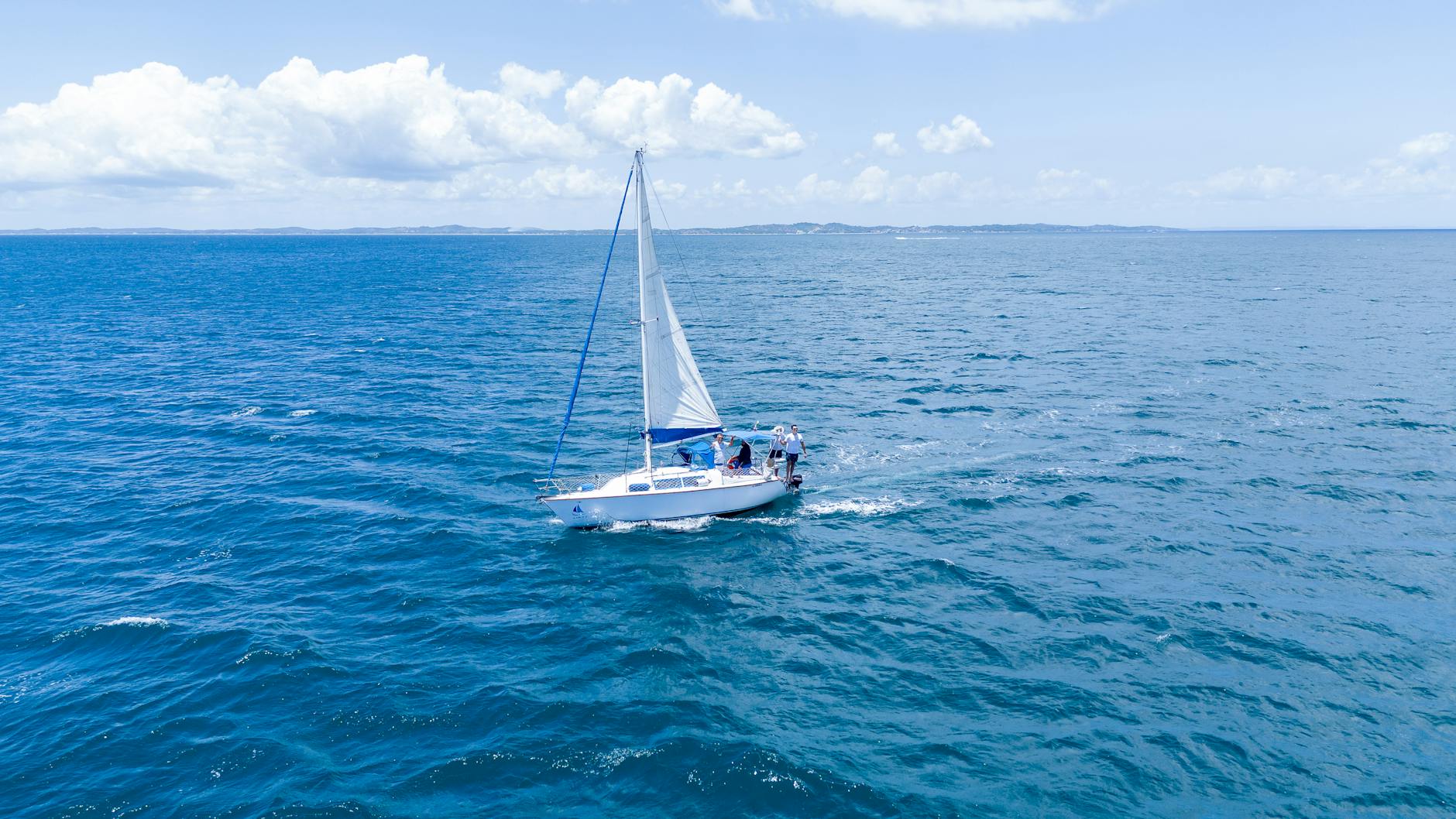
Everyone romanticises the ARC as this bucket-list adventure where you sip rum under the stars while trade winds carry you to paradise – but here’s what the glossy brochures won’t tell you: roughly 15% of boats that register for the Atlantic Rally for Cruisers each November don’t actually finish. Some drop out before departure. Others retire mid-ocean with gear failures, crew conflicts, or medical emergencies. The 2,700 nautical mile crossing from Las Palmas de Gran Canaria to Rodney Bay, St Lucia isn’t a luxury cruise – it’s a 15-21 day endurance test that will expose every weakness in your boat, your preparation, and your crew dynamics.
The Pacific crossing is worse. From La Paz, Mexico to Hiva Oa in the Marquesas – 2,800 nm with zero bailout options – you’re looking at 21-28 days of uninterrupted ocean. No helicopter rescue. No ducking into port when someone gets seasick. Just you, your boat, and 4,500 metres of water beneath the keel.
I’m not trying to scare you off. I’m trying to make sure you actually finish.
The Atlantic Trade Wind Route: What the Numbers Really Look Like
The ARC departs Las Palmas in late November each year – 2026’s departure is scheduled for November 22nd. Entry fees run €3,450-4,200 ($3,700-4,500) depending on boat length and whether you’re racing or cruising division. That fee gets you weather routing from Chris Tibbs and his team, daily position reports, safety coordination, and the rather excellent party at Rodney Bay Marina when you arrive.
But the entry fee is the smallest line item. Here’s the real budget for crossing the Atlantic on a 40-foot cruiser:
Essential Safety Equipment:
- Offshore life raft (6-person): €3,200-5,500 ($3,450-5,900) – Zodiac and Viking are the gold standards
- Category 1 EPIRB: €350-600 ($375-645) – Ocean Signal rescueME PLB1 is the compact option
- AIS Class B transponder: €450-900 ($485-970) – Vesper Cortex integrates VHF, AIS, and monitoring
- Personal locator beacons for each crew: €250 ($270) each
Communications and Navigation:
- SSB radio with Pactor modem: €2,200-3,500 ($2,370-3,770) installed – essential for weather routing emails
- Garmin inReach Mini 2 – satellite communicator: absolutely non-negotiable backup, handles position check-ins and emergency messaging when SSB fails
- Garmin Quatix 7 marine GPS watch: backup navigation on your wrist – saved more than one crew when chartplotter died mid-Atlantic
- Satellite phone (Iridium GO!): €1,100-1,400 ($1,185-1,510) plus airtime
Boat Systems:
- Watermaker (Spectra Ventura 150): €4,500-6,000 ($4,850-6,460) installed – produces 25 litres/hour
- Solar panels (400W minimum): €800-1,200 ($860-1,290)
- Wind generator (Silentwind 400): €1,400 ($1,510)
- Spare parts inventory: €1,500-2,500 ($1,615-2,690) – impellers, zincs, belts, filters, alternator
Total realistic budget for offshore preparation: €18,000-28,000 ($19,400-30,150). And that assumes your boat’s rigging and engine are already in good condition.
The Pacific Crossing: A Different Animal Entirely
Most Atlantic veterans talk about the Pacific like it’s simply a longer version of the same thing. They’re wrong.
The passage from mainland Mexico to the Marquesas Islands – typically departing Puerto Vallarta, Cabo San Lucas, or La Paz in February through early April – covers 2,800-3,000 nm depending on your waypoints. That’s 3-4 weeks at sea minimum. But the real difference isn’t distance.
The Atlantic has a rhythm: consistent 15-20 knot trade winds, boats averaging 140-160 nm per day, predictable weather patterns. The Pacific has the Inter-Tropical Convergence Zone (ITCZ) – that doldrums belt between 5°N and 10°N where trade winds die, squalls appear from nowhere, and you can spend 4-5 days motoring through sloppy seas with zero wind. Budget 150-200 litres of spare diesel beyond your normal consumption.
Weather windows matter more too. Leave too early (January) and you’ll hit the end of hurricane season in Mexico. Leave too late (mid-April) and you’ll arrive in French Polynesia as the South Pacific cyclone season approaches. The sweet spot is February 20-March 31.
Provisioning is different. The Atlantic has a potential stop in Cape Verde – many ARC boats skip it, but it’s there. The Pacific has nothing. You’re carrying 25-30 days of food, water catchment systems, and the knowledge that whatever breaks has to be fixed with what’s aboard.
ARC vs Pacific Puddle Jump: Which Crossing Should You Do First?
This is the question every aspiring blue water sailor asks, and most guides give you the diplomatic non-answer. Here’s the direct comparison:
Atlantic Rally for Cruisers (ARC):
- Distance: 2,700 nm
- Duration: 15-21 days
- Fleet size: 250+ boats
- Weather routing: Provided by World Cruising Club
- Rescue availability: Multiple boats within VHF range, ocean rescue coordination excellent
- Arrival support: Full marina facilities, customs clearance, legendary rum punches
- Cost: €3,450-4,200 entry plus preparation
Pacific Puddle Jump (La Paz to Marquesas):
- Distance: 2,800-3,000 nm
- Duration: 21-28 days
- Fleet size: ~150 boats depart the region each year, loosely coordinated
- Weather routing: You arrange your own (Commanders’ Weather, PredictWind)
- Rescue availability: You’re on your own for most of the passage
- Arrival experience: Raw volcanic islands, minimal infrastructure, life-changing beauty
- Cost: No organised fee, but French Polynesia bond (~$3,000 per person) required
The Verdict: Do the ARC first. It’s the training ground. The organised weather support, the fleet sailing within VHF range, the professional safety backup – these are your training wheels for offshore passage-making. You’ll learn how your boat behaves in 20 knots sustained, how your crew handles watch systems, and what gear actually fails under load. Take those lessons to the Pacific, where the stakes are higher and the support is thinner.
What Most Guides Get Wrong About Ocean Crossings
Every article about the ARC tells you to check your rigging, provision carefully, and practise your heavy weather sailing. All true, all useless.
Here’s what actually determines whether crews finish happy or traumatised: sleep architecture.
The standard three-person watch system – 4 hours on, 8 hours off – sounds reasonable on paper. In practice, it destroys people. By day 8, most crews are functioning on chronic sleep deficit, making poor decisions, snapping at each other, and genuinely hating the experience. I’ve seen couples who sailed together for a decade nearly divorce by the time they reached St Lucia.
The fix is counterintuitive: shorter, more frequent watches. Swedish sailing teams use 3 hours on, 6 hours off, which aligns better with natural sleep cycles. Even better is the “Swedish shift” – three hours on, three off, three on, fifteen off – which gives everyone one long rest period daily.
On a crew of four, consider 2 hours on, 6 hours off. Yes, it means more transitions. But everyone actually sleeps, and the boat still functions in week three when it matters most.
The other thing nobody mentions: **the mental transition**. For the first 3-4 days, your brain keeps expecting to see land. It keeps scanning the horizon for boats, planes, anything. Then somewhere around day 5, something shifts. You stop fighting the emptiness and start existing within it. That transition is disorienting – some people describe mild dissociation, vivid dreams, heightened emotions. It passes, and what’s on the other side is extraordinary. But it’s worth knowing it’s coming.
Joining as Crew: No Boat Required
Here’s the part that makes ocean crossings accessible to anyone: you don’t need to own a boat. Skippers actively seek crew for these passages – experienced sailors are gold, but motivated beginners with a good attitude are consistently welcomed.
The best crew-finding platforms:
- CrewSeekers: £69/year membership, strong European focus, well-organised
- FindACrew.net: Free basic listing, premium features available, global reach
- Cruiser’s Radio Net: Daily SSB broadcasts from cruising boats – often mention crew needs
- Marina notice boards: Las Palmas Marina in Gran Canaria is legendary in October/November – covered in “Crew Wanted” postings
Most skippers ask crew to contribute €500-900 ($540-970) for Atlantic provisions – your share of food, fuel, and harbour fees. Some ask for more on Pacific crossings where provisioning is more complex. Very few pay crew wages; if someone’s offering money, ask hard questions about why they can’t find volunteers.
Before committing to any boat, sail with the skipper first. A day sail or weekend passage tells you everything about boat condition, communication style, and whether you’ll survive three weeks in confined quarters together. If you’re in the Canaries and want to test your offshore aptitude, offshore sailing experiences from Gran Canaria offer multi-day skippered charters that’ll show you what trade wind sailing actually feels like.
Already across and thinking about continuing through the Caribbean? Sailing experiences in Barbados give you a taste of island-hopping without the commitment of full passage crew positions.
Essential Gear: What Actually Matters Offshore
Most gear lists for ocean crossings are written by people who’ve never done one. They’ll tell you to pack a handheld VHF (obviously), spare sunglasses (sure), and a “good book” (you’ll be too tired to read for the first week).
Here’s what actually separates good passages from miserable ones:
Clothing that works at 3am: Night watches in the trades are colder than anyone expects – 18-22°C with constant wind chill and occasional spray. The Gill OS2 offshore jacket is the sweet spot between full offshore foulies and a windbreaker – breathable enough for daytime, waterproof enough for squalls, insulated enough for pre-dawn watches.
Communications redundancy: Your primary SSB or sat phone will probably work. Probably. The Garmin inReach Mini 2 – satellite communicator is your backup – position tracking, two-way messaging, SOS capability, weather forecasts, all through the Iridium satellite network. €350 ($377) plus subscription. Weighs 100g. Fits in your pocket. Absolutely non-negotiable.
Backup navigation: Chartplotters fail. Electronics hate salt water. The Garmin Quatix 7 marine GPS watch gives you GPS position, tide data, and autopilot control on your wrist. When your primary nav goes dark at 0200 hours, you’ll be grateful.
Anti-fatigue gear: A quality offshore harness you’ll actually wear (Spinlock Deckvest 6D, €350/$377), blue-light blocking glasses for night watches (preserves night vision), and motion sickness patches even if you’ve “never been seasick” – offshore is different.
Frequently Asked Questions
How much does it cost to sail across the Atlantic in the ARC 2026?
The ARC entry fee for 2026 runs €3,450-4,200 ($3,700-4,500) depending on your boat’s length and division. But that’s just the beginning. Realistic boat preparation for a 40-foot cruiser ranges €18,000-28,000 ($19,400-30,150) including safety equipment, communications, watermaker installation, and spare parts. Provisioning for a crew of four adds €1,500-2,500 ($1,615-2,690). Marina fees in Las Palmas during preparation run €50-80 ($54-86) per night for 6-8 weeks. St Lucia arrival adds €200-400 ($215-430) in customs and marina fees. Total realistic budget: €25,000-35,000 ($26,900-37,700) beyond the boat itself. If joining as crew without ownership, expect to contribute €500-900 ($540-970) for your share of provisions and fuel.
Can you sail across the Pacific without offshore experience?
Technically yes, but it’s inadvisable and potentially dangerous. The Pacific crossing from Mexico to French Polynesia covers 2,800 nm with zero bailout options, requiring 21-28 days of continuous sailing through varying conditions including the ITCZ doldrums. Unlike the ARC where 250 boats provide mutual support and professional weather routing is included, Pacific crossers are largely self-reliant. Build experience progressively: coastal sailing, overnight passages, a multi-day offshore trip, then the Atlantic crossing as training. Most successful Pacific cruisers have 3,000+ nm of offshore miles before attempting the crossing. If you’re starting from scratch, budget 18-24 months of progressive sailing experience before the Pacific.
What’s the best time to cross the Atlantic by sailboat?
November through January offers the most reliable trade wind conditions for the Canaries-to-Caribbean route. The ARC departs Las Palmas in late November (November 22nd in 2026) specifically to hit the sweet spot – hurricane season has ended in the Caribbean, the
Related reading: Sailing the Pacific: A Realistic Overview of the ARC and Trade Wind Routes in 2026
🌊 Join 10,000+ Ocean Lovers
Get our free Ocean Freedom Starter Guide + weekly guides on surfing, diving & nomad life.
No spam. Unsubscribe anytime.
🌊 Recommended Gear & Experiences
Some links are affiliate links — we earn a small commission at no extra cost to you.
As an Amazon Associate we earn from qualifying purchases.
We may earn a commission on bookings — at no extra cost to you.
⛵ DOWNLOADABLE GUIDE
Bareboat Charter Prep Checklist — 12 Pages
$8.99 — instant PDF download
Free for Ocean Lovers
Get the Ocean Freedom Starter Guide
Gear guides, destination picks, and honest advice for surfers, divers, and sailors. Free.
Join 500+ ocean lovers in our free community
Surf reports, dive trip planning, nomad tips — live in WhatsApp.