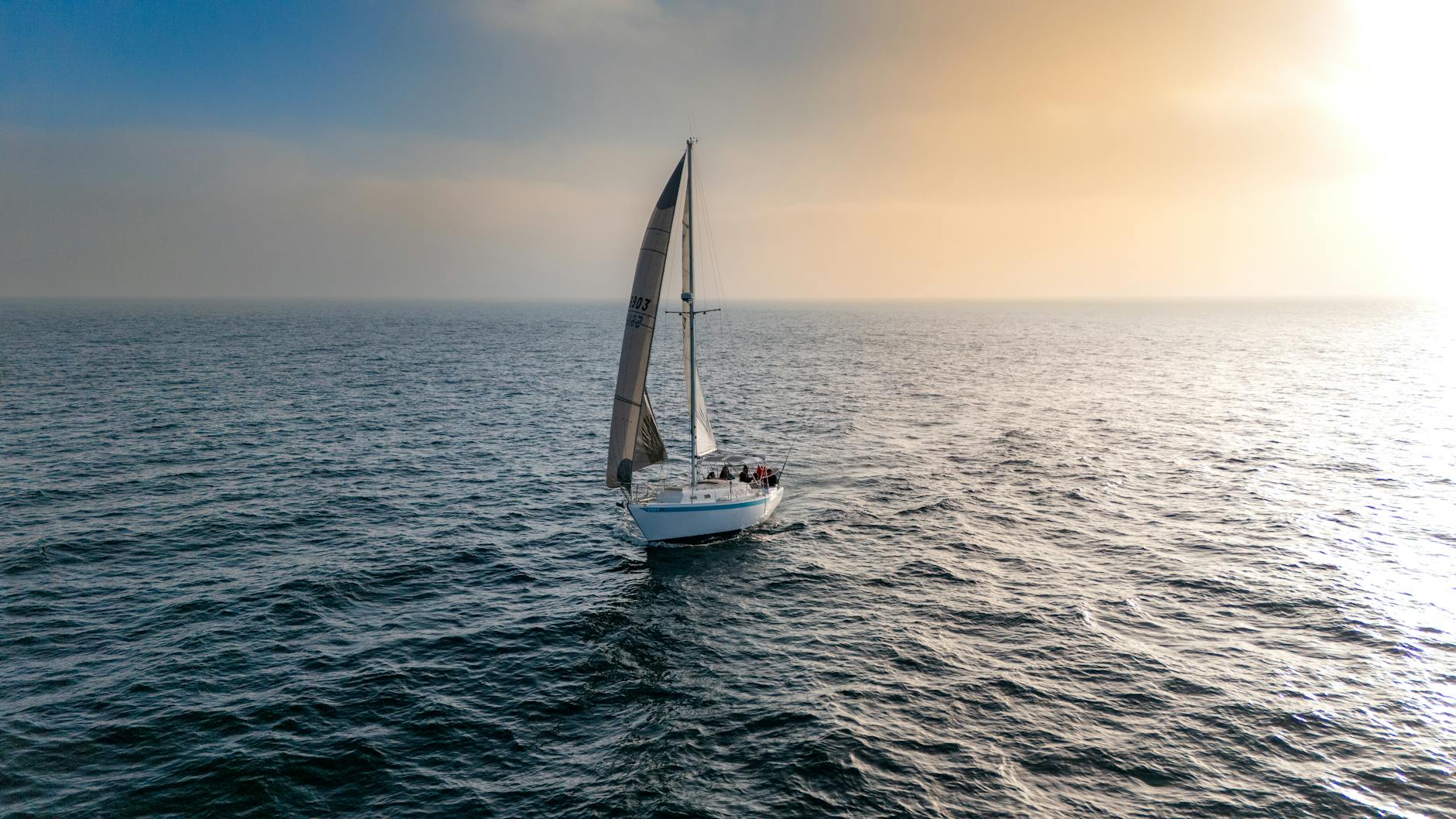
Everyone tells you to start sailing in the Caribbean because it’s “perfect conditions” – steady trade winds, warm water, island-hopping paradise. They’re half-wrong. The British Virgin Islands in peak season (December-March) now see 40-50 charter boats competing for the same anchorages, meaning your “relaxed learning experience” becomes a masterclass in avoiding collisions with aggressive German charterers who’ve done this twenty times before. The real question isn’t which destination has the best wind – it’s which destination gives you space to make mistakes without consequences.
I’ve spent 180+ days under sail across these regions, and I’ve watched beginners flourish in unexpected places while watching others get traumatised in so-called “perfect” conditions. The difference comes down to three factors most sailing blogs ignore: boat traffic density, emergency infrastructure proximity, and instructor-to-student ratios at local schools. Here’s what actually matters for learning to sail in 2026, with real prices, specific schools, and the honest trade-offs nobody mentions.
The Five Best Destinations for Beginner Sailors in 2026
1. The British Virgin Islands – Still the Benchmark, With Caveats
The BVI earned its reputation honestly. Trade winds blow 15-25 knots from December through April with 85% consistency – that’s not marketing fluff, it’s data from the Tortola weather station spanning 40 years. The Sir Francis Drake Channel between Tortola and the outer islands provides natural shelter, and inter-island distances range from 5-15 nm, meaning you can reach your next anchorage in 2-4 hours even in light conditions.
What’s changed: charter prices have jumped 22% since 2023. Sunsail’s 5-day Learn to Sail course from Road Town now runs $2,850 USD (~€2,620) per person including accommodation aboard. Moorings offers a similar programme at $2,695 USD (~€2,480). Both certify you to RYA Competent Crew standard. If you want Day Skipper, add another 5 days and $1,800-2,200 USD (~€1,660-2,030).
The booking window has compressed dramatically – popular March dates are selling out 9-11 months ahead rather than the 4-6 months that was standard in 2022. Book BVI sailing experiences on Viator for day sails and skippered half-charters if full courses are unavailable – these run $180-350 USD (~€166-322) per person and give you genuine helm time.
2. The Greek Cyclades – Timing Is Everything
Most guides warn you away from Greece because of the meltemi, those fierce northerly winds that batter the Aegean from July through August. What they don’t tell you: late May and early September offer some of the best learning conditions in the Mediterranean. Wind speeds settle to 10-18 knots, water temperature hits 22-24°C, and rainfall drops to near-zero.
The Cyclades’ geography works in your favour. Paros to Naxos is 12 nm. Naxos to Ios is 18 nm. Ios to Santorini is 22 nm. These are manageable day passages with time left for swimming and exploring – you’re not grinding through 8-hour crossings wondering when it ends.
Athens-based RYA schools cluster around Alimos Marina, 25 minutes by metro from the city centre. Aegean Sailing School runs a 5-day Competent Crew course at €1,150 per person, while Sailing Athens charges €1,350 for the same certification but includes all meals aboard. Sailing day trips from Athens start from €95 (~$103 USD) and are ideal for testing whether you actually like being on the water before committing €1,000+ to a course.
3. Lake Garda, Italy – The Underrated Option
Freshwater, protected, predictable, and you can see the shore from everywhere. Lake Garda doesn’t get the Instagram glory of Caribbean anchorages, but for pure learning efficiency, it’s exceptional.
The Ora wind blows from the south every afternoon between June and September, typically 12-18 knots, arriving like clockwork around 1pm. Mornings start calm – perfect for theory sessions and basic manoeuvres – then the afternoon gives you consistent wind to practice tacking and gybing without the anxiety of open ocean.
Circolo Vela Torbole runs week-long courses from €680 (~$740 USD) including equipment. Fraglia Vela Riva, at the lake’s northern tip, charges €750 (~$815 USD) for their beginner programme with smaller class sizes (4:1 student-to-instructor ratio versus the 6:1 typical in Caribbean schools). Sailing experiences on Lake Garda offer half-day introductions from €75 (~$82 USD) if you want to test the waters – literally – before committing to a full course.
Bonus: accommodation in Riva del Garda runs €60-90 per night for decent hotels, less than half what you’d pay in Tortola. Factor in €15 lunches instead of $35 BVI waterfront meals, and the total trip cost difference becomes substantial.
4. The Whitsunday Islands, Australia
The Whitsundays deliver the tropical postcard experience with one critical advantage: the Great Barrier Reef lagoon creates protected sailing conditions across 74 islands spread over 900 km². Winds blow 10-20 knots from the southeast for approximately 280 days per year, and the water stays 24-29°C year-round.
Airlie Beach is the hub. Whitsunday Marine Academy offers a 5-day Competent Crew course at AUD 1,950 (~$1,270 USD / €1,170), while Explore Whitsundays runs combined sailing-and-PADI courses for those wanting dual certifications. The catch: Australian courses don’t automatically convert to RYA – you’ll need additional sea time validation if you want to charter in Europe later.
Flight costs make this option pricey for Europeans and North Americans. Budget AUD 350-500 (~$230-325 USD) for domestic flights from Sydney or Brisbane, plus AUD 120-180 per night for accommodation in Airlie Beach. Total trip cost typically runs $3,200-4,000 USD all-in for a week – roughly 30% more than a comparable Mediterranean option.
5. Palma de Mallorca, Spain
Spain’s largest sailing marina sits in the Bay of Palma, offering calm, shallow water (6-12m depth throughout the bay) ideal for learning. The bay spans 20 km across, giving you room to practice without congestion while staying close enough to port that any problem becomes manageable.
October through May avoids tourist crowds and drops course prices 15-20%. ISCA (International Sailing Center Arenal) runs RYA Day Skipper courses at €1,100 (~$1,195 USD) – among the best value in Europe for a fully-certified programme. Sail & Surf Pollença charges €950 for Competent Crew with accommodation included.
Palma’s advantage is infrastructure: the marina has 24-hour support, Spanish Coast Guard response times average under 45 minutes, and charter companies maintain fleets of 200+ vessels, meaning replacement boats are available if mechanical issues arise during your course.
Lake Garda vs. The British Virgin Islands: Which Is Actually Better for Beginners?
This is the comparison most guides won’t make because the BVI has better affiliate commissions. But here’s the honest breakdown:
British Virgin Islands: 5-day course cost $2,700-2,850 USD. Accommodation included (aboard vessel). Flights from East Coast US: $450-700. Total: $3,150-3,550 USD for the week.
Lake Garda: 5-day course cost €680-750 (~$740-815 USD). Accommodation: €420-630 for the week. Flights from major European cities: €80-200. Total: €1,180-1,580 (~$1,285-1,720 USD) for the week.
The verdict: Lake Garda wins for European-based beginners by a factor of two on cost while delivering comparable or better learning conditions. The BVI wins for Americans who want saltwater ocean sailing and don’t mind paying premium prices for the Caribbean experience. If your goal is pure skill acquisition at minimum cost, Garda is the rational choice. If you want the romance of island-hopping under tropical skies, the BVI remains unmatched – just budget accordingly.
What Most Sailing Guides Get Wrong
Every article tells you to chase “consistent winds” and “warm water.” This advice sounds logical but misses the point entirely.
Beginner sailors don’t need consistent 20-knot winds – they need variable conditions between 8-18 knots so they actually learn how sails behave across different wind speeds. A week of perfect 15-knot trade winds teaches you to sail in exactly one condition. A week where the wind builds from 10 knots at noon to 18 knots by 4pm teaches you to trim, reef, and adapt – skills that actually transfer.
Similarly, “warm water” isn’t the blessing it sounds like. Mediterranean sailors wearing lightweight gear learn to be careful about boom swings and entanglement – a capsize in 16°C water motivates caution. Caribbean sailors in 28°C water often develop sloppy habits because falling in feels like a pool dip rather than a survival situation.
The schools with the best instruction-to-outcome ratios – measured by student certification pass rates and subsequent bareboat charter success – are often in “suboptimal” conditions: Scotland, the Netherlands, the northern Adriatic. The places that force you to think, not just cruise.
Essential Gear for Your First Sailing Course
Your school will provide safety equipment, but bringing your own key items ensures proper fit and familiarity:
Offshore sailing jacket: Even in the Caribbean, spray gear is non-negotiable. Night watches in 15-knot winds get cold, and a single squall can soak you through. Budget $150-300 for a jacket that’ll last multiple seasons.
Spinlock Deckvest DURO lifejacket: Schools provide lifejackets, but they’re often ill-fitting one-size-fits-most models. A personal Deckvest DURO ($280-350 USD) adjusts properly and deploys reliably. If you’re continuing to bareboat after your course, this is the first investment to make.
Garmin inReach Mini 2: For offshore passages outside mobile coverage, this $400 device provides two-way satellite messaging and SOS capability. Overkill for a Garda course, essential for BVI or Whitsundays passages where VHF is your only other lifeline.
Zhik sailing gloves: Rope handling on day one destroys soft hands. A $45 pair of Zhik gloves saves you blisters and lets you actually focus on learning rather than wincing every time you grip a line.
The Fastest Path to Global Bareboat Certification
RYA Day Skipper remains the most widely-accepted entry-level certification for bareboat charter worldwide. The course combines 2 days of theory (navigation, chart work, weather, collision regulations) with 5 days practical aboard a 32-40ft yacht.
Pricing varies dramatically by location:
- UK (Scotland, Southampton): £1,200-1,800 (~$1,520-2,280 USD)
- Mediterranean (Greece, Spain, Croatia): €800-1,200 (~$870-1,305 USD)
- Caribbean (BVI, Antigua): $1,800-2,400 USD
- Thailand (Phuket): $1,200-1,600 USD with accommodation included
The American Sailing Association (ASA) 101-104 progression is the US equivalent and is accepted by most Caribbean charter companies. Budget $2,000-2,800 for the combined courses.
Frequently Asked Questions
What is the best time of year to learn sailing as a beginner?
Shoulder seasons consistently outperform peak periods for learning. In the Caribbean, April-May offers 15-20% fewer boats in anchorages than January-March while maintaining reliable 12-18 knot trade winds. The Mediterranean is optimal in late May or September, when meltemi winds haven’t yet arrived or have subsided, and water temperatures remain comfortable at 21-24°C. Lake Garda’s June and September see fewer recreational sailors than July-August while the Ora thermal wind still delivers afternoon breezes. Avoid peak tourist months – the crowding affects your learning space, instructor availability, and accommodation costs. Most schools offer 10-15% discounts for shoulder season bookings.
How much does it cost to get certified to sail a bareboat charter?
Full bareboat certification (RYA Day Skipper or ASA 104) typically costs $1,500-3,000 USD depending on location, with Mediterranean schools (Greece, Spain, Croatia) offering the best value at €800-1,200 and Caribbean schools charging premium rates of $2,200-2,800 USD. Factor in 10-12 days of course time (either consecutive or split weekends), plus accommodation if not included – budget €50-80 per night in Europe, $150-200 per night in the Caribbean. Total investment including flights, gear, and living expenses runs $2,500-4,500 USD for Europeans learning in the Mediterranean, or $4,000-6,000 USD for Americans learning in the Caribbean. This certification remains valid indefinitely but charter companies may require you to demonstrate recent sailing experience if you haven’t sailed in 24+ months.
Can you learn to sail without any prior experience?
Absolutely – that’s precisely what Competent Crew and ASA 101 courses are designed for. You’ll learn basic terminology (port, starboard, tack, gybe), sail handling, rope work, and safety procedures from zero knowledge. Most courses accept students from age 16 upward with no fitness prerequisites beyond ability to swim 50 metres and tread water for 10 minutes. The learning curve is surprisingly fast: by day three of a typical five-day course, you’ll be helming independently in moderate conditions. What matters more than prior experience is attitude – students who ask questions, volunteer for uncomfortable tasks (anchor handling, night watches), and admit mistakes consistently outperform those who pretend competence they don’t have.
What’s the difference between RYA and ASA sailing certifications?
RYA (Royal Yachting Association) certifications are British-originated and recognised worldwide, particularly dominant in Europe, Australia, and the Caribbean. ASA (American Sailing Association) certifications are US-based and accepted primarily in North America and US-frequ
Related reading: Best Sailing Destinations for Beginners 2026: Where to Learn Without the Stress
🌊 Join 10,000+ Ocean Lovers
Get our free Ocean Freedom Starter Guide + weekly guides on surfing, diving & nomad life.
No spam. Unsubscribe anytime.
🌊 Recommended Gear & Experiences
Some links are affiliate links — we earn a small commission at no extra cost to you.
As an Amazon Associate we earn from qualifying purchases.
We may earn a commission on bookings — at no extra cost to you.
⛵ DOWNLOADABLE GUIDE
Bareboat Charter Prep Checklist — 12 Pages
$8.99 — instant PDF download
Free for Ocean Lovers
Get the Ocean Freedom Starter Guide
Gear guides, destination picks, and honest advice for surfers, divers, and sailors. Free.
Join 500+ ocean lovers in our free community
Surf reports, dive trip planning, nomad tips — live in WhatsApp.