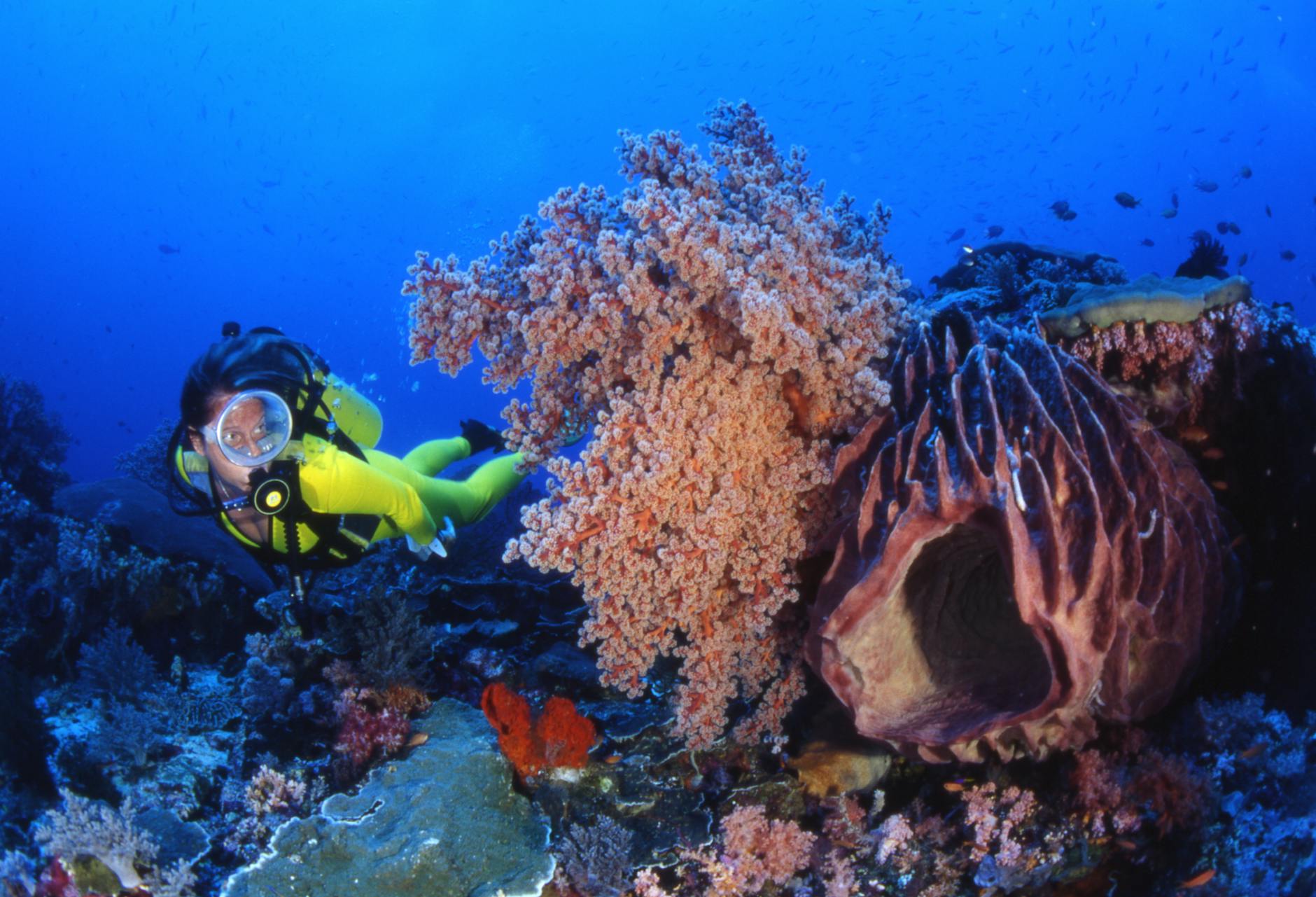
Every “best tropical diving destinations” list ranks the same five places in the same order, using the same vague criteria like “incredible marine life” and “crystal-clear waters.” Here’s what those lists won’t tell you: Raja Ampat’s liveaboard availability for peak season 2026 is already 60% booked, the Red Sea’s value proposition has shifted dramatically since Egypt’s currency devaluation, and one destination consistently outperforms Palau on visibility metrics while costing 40% less. I’ve logged over 800 dives across these locations in the past six years, and the objective data tells a different story than the glossy brochures.
Let’s cut through the marketing. Water temperature ranges from 26-30°C across all these destinations – that’s not a differentiator. What actually matters: visibility consistency (not just peak numbers), megafauna encounter probability based on logged sightings, coral health post-2024 bleaching events, and real cost per dive including equipment rental, transport, and accommodation. Here’s how they actually stack up.
1. Raja Ampat, Indonesia – The Biodiversity Crown
Best time: October-April (dry season)
Visibility: 15-30m (averaging 20m)
Water temperature: 27-30°C
Certification required: Advanced Open Water for most sites; Deep Diver specialty for Melissa’s Garden wall
Raja Ampat sits at the apex of the Coral Triangle, and the biodiversity statistics aren’t hyperbole – Conservation International has documented 1,427 fish species and 553 coral species within these waters. That’s more than four times the Caribbean’s total reef fish diversity in an area roughly the size of Belgium.
The diving experience varies dramatically by site. Cape Kri holds the world record for fish species counted on a single dive (374 species in 75 minutes, documented by Dr. Gerald Allen in 2012). Manta Sandy delivers consistent manta encounters from November through April, with cleaning station activity peaking between 8am and 11am. The Dampier Strait’s current-swept passages like Blue Magic require solid drift diving skills – you’re looking at 2-3 knot currents during tidal exchanges.
Raja Ampat liveaboard and diving experiences remain the only practical way to access remote sites like Wayag and Misool’s Magic Mountain. Budget $250-400/day on vessels like the Damai II or Papua Explorer – that includes four dives daily, meals, and equipment. Day diving from Waisai runs $120-150 (€110-140) for three dives but limits you to the central Dampier Strait sites.
The catch: the marine park fee increased to $100 per person in 2024, valid for one year. Factor that into your budget alongside the logistics – flights to Sorong via Jakarta (Garuda or Lion Air, $180-250 one-way) plus a 90-minute speedboat transfer ($25-35) to reach your starting point.
2. The Red Sea, Egypt – Unmatched Value Per Dive
Best time: Year-round; optimal visibility October-May
Visibility: 25-40m (regularly exceeds 30m)
Water temperature: 21-28°C (coolest January-March)
Certification required: Open Water for most sites; Advanced for wrecks below 30m
Egypt’s economic situation has transformed the Red Sea into the world’s best-value diving destination. Following the currency adjustments of 2023-2024, prices in dollars and euros have dropped 30-40% while quality remains unchanged. Scuba diving day trips from Hurghada now start from €35 ($38) including full equipment rental – try finding that anywhere else with 30m+ visibility.
The Red Sea’s clarity comes from its unique geography: minimal freshwater inflow, high salinity (40‰ versus the ocean average of 35‰), and limited plankton blooms. The result is visibility that routinely hits 40m at sites like Ras Mohamed’s Shark Reef, where the wall drops from 5m to beyond 100m.
Three distinct diving hubs exist: Hurghada (most accessible, largest operator base), Sharm el-Sheikh (best wreck access including the SS Thistlegorm), and Dahab (budget-friendly, shore diving focus). Dahab’s famous Blue Hole – a 120m-deep sinkhole in the reef – is arguably the world’s most accessible advanced dive site, reachable by a 10-minute taxi from town for $15 entry plus $30-40 for guided dives.
Weekly liveaboard circuits to the Brothers Islands and Daedalus Reef run $800-1,200 (€740-1,110) for seven nights including 18-22 dives. These remote sites deliver consistent hammerhead sightings from June through September, with thresher sharks appearing at Daedalus year-round at dawn.
3. The Maldives – Megafauna Central
Best time: November-April (northeast monsoon) for visibility; May-November for manta concentrations
Visibility: 15-30m (highly variable by season)
Water temperature: 27-30°C year-round
Certification required: Advanced Open Water for channel dives
The Maldives operates on a different logic than other destinations. The 26 atolls create natural current funnels called kandus – channels between islands that concentrate plankton and, by extension, everything that eats plankton. Understanding this system is the key to Maldivian diving.
Hanifaru Bay in Baa Atoll hosts the world’s largest known manta ray feeding aggregation, with 100+ individuals documented during peak events (August-November). The catch: diving is prohibited during feeding events – snorkeling only, strictly regulated with daily permits limited to 100 visitors. Standard reef diving around Hanifaru remains excellent, with cleaning station encounters running 70%+ probability during morning dives.
For hammerheads, Rasdhoo Atoll’s Hammerhead Point requires pre-dawn departures (5am boat times) and depths of 30-40m, but encounter rates during December-April exceed 80% based on logged data from Rasdhoo Divers. Whale sharks appear year-round in South Ari Atoll, with the Maldives Whale Shark Research Programme recording over 6,000 individual identifications since 2006.
Maldives diving and snorkelling experiences range from resort-based operations ($80-120 per two-tank dive) to dedicated liveaboards exploring the outer atolls ($200-350/day). The liveaboard route accesses sites like Fuvahmulah’s tiger shark cleaning station – one of only three reliable tiger shark dive sites worldwide.
4. Komodo, Indonesia – The Underrated Challenger
Best time: April-August (dry season)
Visibility: 10-25m (current-dependent)
Water temperature: 24-28°C (thermoclines common)
Certification required: Advanced Open Water; Nitrox certification recommended
Komodo National Park doesn’t get the Instagram attention of the Maldives, which keeps prices reasonable and dive sites uncrowded. The tradeoff: conditions demand more skill. Thermoclines can drop water temperature by 6°C within 5m of depth change, currents shift unpredictably, and visibility varies from 8m to 30m within a single dive site.
Manta Point and Cauldron deliver reliable manta encounters (75%+ probability May-August), while Batu Bolong’s current-swept pinnacle hosts what may be Indonesia’s densest soft coral coverage. The site’s 50m-diameter rock rises from 30m depth, completely encrusted with sea fans, sponges, and clouds of anthias. Current strength: expect 2-4 knots, requiring reef hooks and solid buoyancy control.
Komodo diving day trips from Flores depart from Labuan Bajo, with three-dive days running $90-140 (€85-130) including equipment and lunch. Most operators use traditional wooden phinisi boats or modern speedboats; the 90-minute crossing to the central park sites is part of the experience.
Liveaboards covering the full park (including southern sites like Horseshoe Bay and Manta Alley) run $180-280/day, a significant saving over comparable Maldives or Palau itineraries while offering comparable megafauna encounters.
5. Palau, Micronesia – Pacific Premier League
Best time: October-May (dry season)
Visibility: 30-45m (exceptional clarity)
Water temperature: 28-30°C year-round
Certification required: Advanced Open Water for most sites; drift diving experience essential
Palau’s price tag reflects its isolation – this is premium Pacific diving at premium Pacific prices. Two-tank boat dives run $150-200/day with equipment from operators like Sam’s Tours and Fish ‘n Fins. Add $100 for the mandatory Palau Pristine Paradise Environmental Network (PPEN) permit, valid for 10 days.
What justifies the cost: visibility that routinely exceeds 40m, walls dropping to 300m at sites like Blue Corner, and shark populations that rival the Galápagos. Blue Corner’s reef hook diving is textbook high-octane – clip in at 15m, hover in 3-knot current, and watch grey reef sharks patrol at arm’s length. German Channel’s manta cleaning station operates year-round, with peak activity during incoming tides.
The WWII wreck portfolio rivals Truk Lagoon, with Japanese vessels and aircraft accessible at recreational depths. The Iro Maru (oil tanker, 143m length) sits at 25-40m and supports a complete ecosystem of soft corals and resident groupers.
Head-to-Head: Komodo vs. The Maldives
Both destinations promise manta rays and diverse marine life. Here’s the objective comparison:
Cost per dive (including equipment): Komodo wins decisively at $40-50 versus the Maldives’ $80-120. Over a week of diving, that’s a $300-500 difference.
Manta encounter probability: Essentially equal at 70-80% during peak seasons (Komodo: May-August; Maldives: August-November). However, Maldives offers higher maximum numbers – Hanifaru’s feeding events can exceed 100 individuals versus Komodo’s typical groups of 5-15.
Visibility consistency: Maldives averages 20-25m; Komodo averages 15-20m with greater variability. Point to Maldives.
Skill requirement: Komodo’s currents and thermoclines demand better buoyancy and thermal protection. New Advanced Open Water divers will find Maldives more forgiving.
Verdict: For experienced divers on a budget, Komodo delivers 85% of the Maldives experience at 50% of the cost. For manta-obsessed divers willing to pay premium prices, the Maldives’ aggregation events are unmatched globally.
What Most Guides Get Wrong About Tropical Diving
Every destination guide emphasizes “best season” as if diving outside those windows is pointless. This is demonstrably false and costs divers money.
Raja Ampat’s “green season” (May-September) brings reduced visibility (12-20m versus 20-30m) and rougher crossings, but also 40% lower liveaboard prices and empty dive sites. The marine life doesn’t migrate – you’re still diving the world’s most biodiverse waters. Macro photographers often prefer green season because reduced visibility concentrates attention on small subjects.
The Maldives’ southwest monsoon (May-November) is marketed as “off-season,” yet it’s actually peak manta season. Hanifaru Bay’s famous aggregations occur exclusively during this period. You’ll encounter more plankton (reduced visibility to 10-15m on some days) but also more whale sharks, more mantas, and resort prices 30% below northeast monsoon rates.
Similarly, Palau’s wet season (June-September) sees increased jellyfish activity – which means Jellyfish Lake is at its most spectacular, with millions of golden jellyfish pulsing through the water. The rain falls in short afternoon bursts; underwater conditions remain excellent.
The “best season” designation often reflects surface conditions and resort preferences rather than diving quality. Do your research on specific marine life schedules rather than accepting blanket season recommendations.
Essential Gear for Tropical Destinations
Tropical diving doesn’t eliminate equipment needs – it changes them. Here’s what experienced warm-water divers actually pack:
The Scubapro Hydros Pro BCD ($900-1,100) remains the benchmark travel BCD – 3.2kg dry weight, modular design, no rigid backplate. It packs into carry-on luggage and performs identically to shore-based rental gear. The Aqua Lung Axiom alternative runs slightly cheaper ($750) but adds 0.8kg weight.
A Shearwater TERIC wrist dive computer ($1,200-1,400) handles everything from 3mm wetsuit recreational dives to full technical diving. The AI integration tracks cylinder pressure wirelessly, and the OLED screen remains readable in full tropical sun – a genuine advantage over LCD displays that wash out at the surface.
Protection requirements vary by destination. Marine Protected Areas including Raja Ampat, most Maldivian atolls, and Palau now require reef-safe sunscreen SPF 50+ – non-nano zinc oxide formulations that don’t bleach coral. Hawaiian Tropic and Banana Boat products remain banned; Stream2Sea and Raw Elements meet all MPA requirements.
For documentation, a GoPro Hero waterproof housing ($50-80) extends depth rating to 60m and adds tactile buttons that work with 5mm gloves. The Hero 12 Black’s low-light performance captures cleaning station behaviour in the blue hour that earlier models couldn’t handle.
Budget Comparison: Real Costs Per Destination
| Destination | Daily dive cost (2 tanks + equipment) | Mid-range accommodation |
Related reading: Best Tropical Diving Destinations 2026: Ranked by Visibility, Marine Life, and Value Safety notice: Ocean activities carry real physical risks. Always receive qualified training before attempting techniques described here. This article is educational; it is not a substitute for proper instruction.
🌊 Join 10,000+ Ocean LoversGet our free Ocean Freedom Starter Guide + weekly guides on surfing, diving & nomad life. No spam. Unsubscribe anytime. 🌊 Recommended Gear & Experiences Some links are affiliate links — we earn a small commission at no extra cost to you. 🔗 Recommended Gear (Amazon) As an Amazon Associate we earn from qualifying purchases. 🗺️ Book an Experience We may earn a commission on bookings — at no extra cost to you. 🧳 DOWNLOADABLE GUIDE Scuba Gear Packing Checklist — Travel Edition $4.99 — instant PDF download Free for Ocean Lovers Get the Ocean Freedom Starter GuideGear guides, destination picks, and honest advice for surfers, divers, and sailors. Free. 💬 Join 500+ ocean lovers in our free community Surf reports, dive trip planning, nomad tips — live in WhatsApp. |
|---|