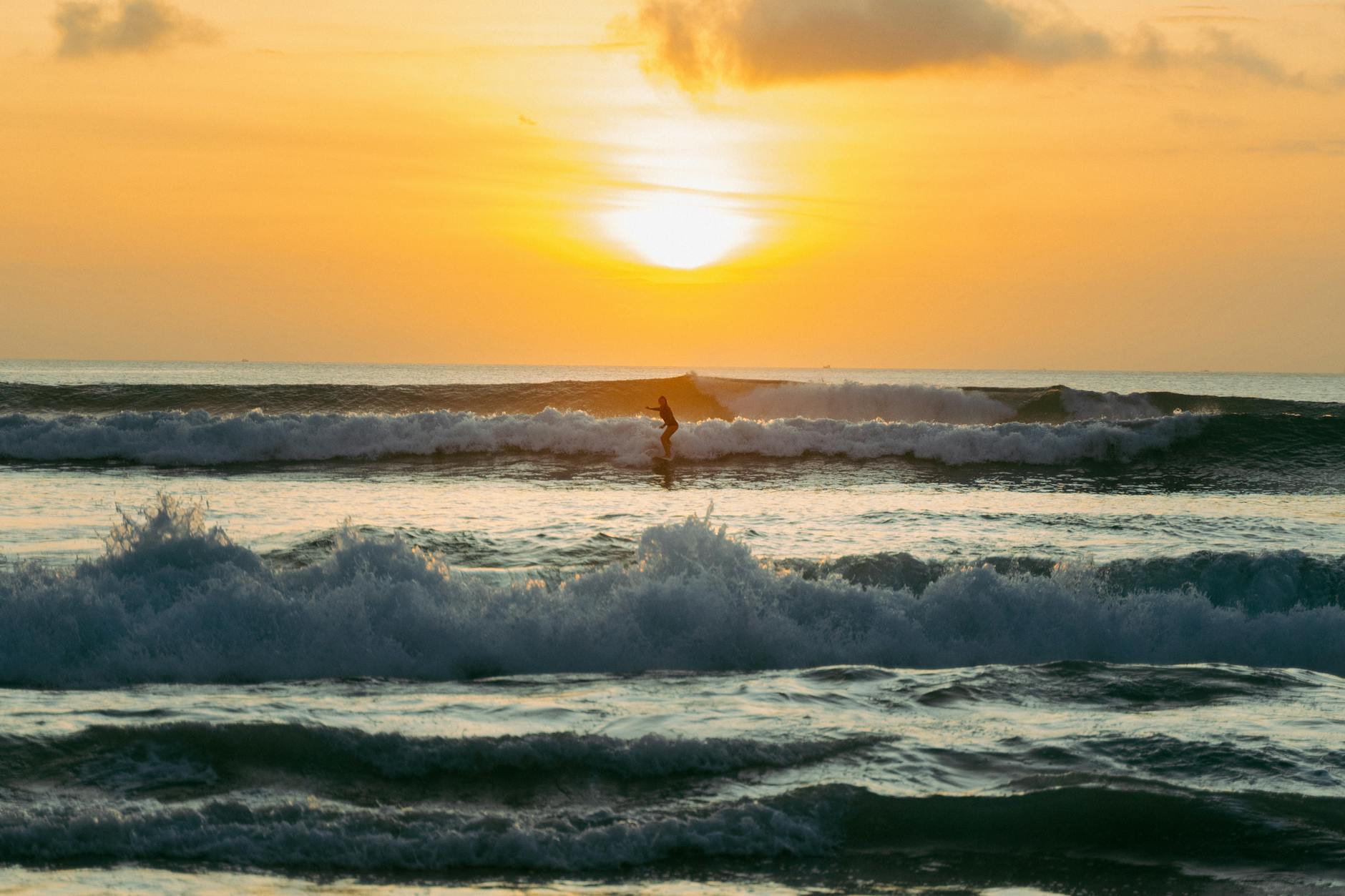
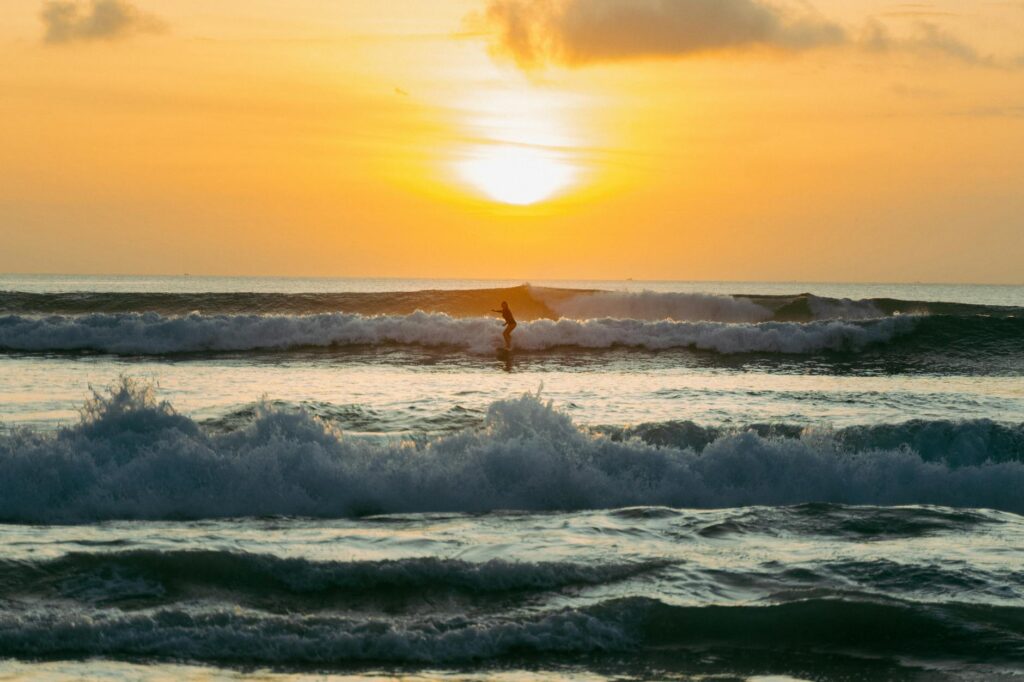
Everyone tells you to avoid Bali’s crowds by visiting in the wet season. That advice is backwards. The real secret is that February through April – Bali’s quietest months – actually delivers better surf conditions for 70% of the island’s breaks than the supposedly “ideal” dry season. The west coast swells that wrap around during these months produce cleaner, longer rides at Medewi, Balian, and Canggu’s outer reefs than anything you’ll score fighting for waves at Uluwatu in August. Yet accommodation rates drop 25-35%, flights from Europe cost €450 return versus €750+ in July, and the rice terraces glow electric green. The 20 million annual visitors have been sold on the wrong months.
The Real Seasonal Breakdown (Not What the Brochures Say)
Dry season runs May through October. East winds blow offshore for the Bukit Peninsula’s famous lefts – Uluwatu, Padang Padang, Bingin, Impossibles. Diving visibility peaks at 25-35m around Nusa Penida and Tulamben. These are facts. But here’s what the tourism boards won’t mention: lineups at Uluwatu’s main peak now average 40-60 surfers between 7am and 10am during July and August. Padang Padang’s barrel section accommodates maybe 8 surfers safely. You’ll spend more time paddling around bodies than actually surfing.
Wet season (November-April) brings southwest groundswells that light up the west coast. Medewi’s 200m left-hander works best December through March. Balian’s rivermouth peak – largely unknown to tourists – handles overhead waves with only 5-10 surfers out. Canggu’s outer reefs (Old Man’s, Berawa) turn on properly when the swell wraps. Yes, you’ll encounter afternoon rain. It lasts 45 minutes, cools everything down, and clears out the tourists.
For diving, the window narrows but doesn’t close. Manta Point operates reliably June through October, with peak Mola Mola sightings July through September when thermoclines push cold water (14-17°C) up from the depths. Tulamben’s USAT Liberty wreck? Diveable year-round with 15-20m visibility even in January. Pack a 5mm wetsuit for Nusa Penida regardless of season – that water hits 22°C on the surface and plummets at depth.
Best Surf Breaks by Honest Skill Assessment
Actual Beginners (First 20 Sessions)
Forget Kuta Beach’s reputation – it’s now so packed with surf schools that collisions happen daily. Instead, head to Sanur’s reef break on the east coast. The wave is gentle, the crowd is minimal, and you’re not competing with 200 other learners. Surf lessons in Kuta start from €25/$27 including board and instructor, but lessons at Sanur’s smaller schools like Rip Curl School of Surf cost the same with a fraction of the chaos. For absolute beginners, Legian offers slightly more space than Kuta proper – arrive before 7am and you’ll have breathing room.
Competent Intermediates (Can Paddle Out in Overhead Surf)
Medewi deserves its reputation. This west coast point break, 2.5 hours from Seminyak, produces rides of 150-250m on solid swells. The wave is forgiving – a mellow, tapered wall that lets you practice cutbacks without consequence. Expect €3-4 board rentals from the warung shacks lining the beach. The drive along the coastal road passes through Tabanan’s rice terraces, making it a worthwhile day trip even if the swell doesn’t cooperate.
Batu Bolong in Canggu suits strong intermediates who can handle a crowded peak. The wave itself is manageable, but the lineup politics require experience. Locals dominate the inside section. Tourists cluster on the shoulder. Know the hierarchy or you’ll spend your session getting burned.
Advanced Surfers (Comfortable in Double-Overhead Hollow Waves)
Uluwatu remains one of the world’s great waves. The main peak – accessed via the famous cave staircase carved into the cliff – delivers a fast, hollow left that walls up on larger swells. The inside section, called Temples, offers a bowly end section that can make or break your session. Paddle out at dawn (5:45am first light) or after 4pm when the crowds thin. Advanced surf charter experiences in Bali run €150-250/$165-275 for full-day sessions with local guides who know the tide windows – worth it for your first sessions at unfamiliar breaks.
Padang Padang (the competition wave, not the beach break) produces Indonesia’s most photographed barrels. It only breaks properly on larger swells (2m+ at 15 seconds), and when it does, expect 20+ surfers jockeying for every set wave. This break rewards patience and wave knowledge. First-timers get cleaned up by the reef. The channel makes wipeouts survivable, but cuts and reef rash are standard.
Bali’s Best Dive Sites (With Actual Logistics)
USAT Liberty Wreck, Tulamben
This WWII American cargo ship sits 3-30m deep, directly accessible from shore – no boat required. You’ll walk 30m across black volcanic sand and descend onto a hull encrusted with hard corals, soft corals, and gorgonian fans. Bumphead parrotfish cruise the bow section in schools of 20-30. Pygmy seahorses hide in the sea fans at 22m. Night dives reveal Spanish dancer nudibranchs and hunting octopus. Two-tank shore dives with local operators like Adventure Divers Bali cost €45/$50 including full gear rental. The drive from Sanur takes 2.5 hours along winding coastal roads – leave by 5am to hit the wreck before the dive school buses arrive at 9am.
Manta Point, Nusa Penida
Manta Point diving day trips from Nusa Penida operate daily during season (June-October) for €85-110/$95-120 including two dives, lunch, and boat transfers. The cleaning station sits at 8-12m depth over a rocky reef. Mantas – wingspans averaging 3-4m – circle repeatedly while cleaner wrasses pick parasites from their gills. Morning dives (first departure, 8am boat) see the most activity. Currents can rip through at 2-3 knots; intermediate certification and recent dive experience are genuinely necessary, not just recommended.
Crystal Bay, Nusa Penida
The Mola Mola (ocean sunfish) appear July through October when cold upwellings bring 14-17°C water into the 25-35m zone where these bizarre creatures hover. Bring or rent a 5mm full wetsuit – you’ll need it. Blue Corner Dive Nusa Penida charges €75/$82 for two-tank Mola Mola specialty dives. Sightings aren’t guaranteed, but July through September delivers roughly 70% success rates on morning dives when thermoclines are most pronounced.
Uluwatu vs Canggu: Where Should You Actually Base Yourself?
This is the decision that shapes your entire Bali trip, and most guides dodge it with “depends on your vibe.” Here’s the direct comparison:
Uluwatu/Bukit Peninsula wins for serious surfers. You’re within 15 minutes of Padang Padang, Bingin, Impossibles, and Uluwatu itself. Accommodation clusters on the cliffs above – Bingin’s cliff-top guesthouses cost €40-80/$45-90 per night with Indian Ocean views. Restaurants are fewer, nightlife is quieter, and the area shuts down by 11pm. You’ll need a scooter for everything. The trade-off: you’re 45 minutes from Canggu, 75 minutes from Seminyak, and 90+ minutes from the airport without traffic.
Canggu wins for balance. The surf is worse – Batu Bolong and Echo Beach are crowded, inconsistent, and frankly overrated compared to the Bukit breaks. But you’re positioned for everything else: yoga studios, co-working spaces, restaurants, nightlife, and easy access to west coast breaks like Medewi and Balian. Accommodation ranges from €25/$28 dorm beds to €150/$165 villa rentals. The digital nomad infrastructure is mature.
The verdict: If surfing is your primary activity and you can ride overhead waves, base yourself in Bingin or Padang Padang area. If you’re combining surf with diving, yoga, and social life – or if you’re still developing your surfing – Canggu makes more practical sense despite its crowds.
What Most Guides Get Wrong About Bali
Every Bali travel guide tells you the island is “crowded but worth it.” Here’s the part they skip: the crowds concentrate in an area covering roughly 8% of the island’s landmass. Seminyak, Kuta, Legian, lower Canggu, and the main Uluwatu clifftop strip see 90% of tourist traffic. Step outside this zone and Bali empties out.
The north coast – Lovina, Pemuteran, Menjangan Island – receives a tiny fraction of visitors despite having Bali’s best macro diving (Menjangan’s walls are world-class for nudibranchs and frogfish) and dolphin encounters. The east coast’s Amed strip offers beachfront bungalows for €30/$33 per night with house reefs you can snorkel directly from your room. Sidemen in the east-central hills provides rice terrace views without Tegallalang’s tour bus invasions.
The mistake isn’t visiting Bali – it’s staying in the tourist corridor. Rent a scooter (€5/$5.50 per day, available everywhere), ride 45 minutes in any direction from Seminyak, and you’ll find the Bali that existed 15 years ago.
Essential Gear for Bali Water Activities
Reef-safe sunscreen SPF50+ is non-negotiable. Bali has banned chemical sunscreens containing oxybenzone and octinoxate at many dive sites, and enforcement is increasing. Mineral-based zinc formulas work better in the water anyway and don’t sting your eyes during duck dives.
For Nusa Penida diving, depth changes happen fast – you’ll drop from 8m to 35m in minutes chasing Mola Mola. A Shearwater TERIC dive computer (€850/$930) handles the multi-level profiles these dives require and provides the redundancy serious divers need. If you’re diving more than 10 days annually, own your own computer rather than trusting rental units with unknown service histories.
The Scubapro Hydros Pro travel BCD (€650/$710) weighs 3.2kg and packs flat – airlines rarely charge excess baggage for gear under 4kg. Compared to traditional jacket-style BCDs at 4-5kg, you’re saving crucial weight for Indonesian domestic flights with their strict 7kg carry-on limits.
Practical Logistics for 2026
Scooter rental remains essential. Daily rates run €4-6/$4.50-6.50 depending on bike condition and rental duration. Officially, you need an international driving permit with motorcycle endorsement. Practically, rental shops rarely check and police checkpoints target speeding and helmetless riders, not paperwork. That said, travel insurance typically voids motorcycle claims without proper licensing – factor this into your risk calculation.
The Ngurah Rai bypass, completed in 2023, has cut Seminyak-to-airport transit from 60+ minutes to 25 minutes outside peak hours. Canggu to the airport now takes 35-40 minutes via the bypass. Plan accordingly for early flights.
Telkomsel SIM cards offer the best coverage in rural areas – essential if you’re riding to Medewi, Amed, or the north coast. Buy at the airport arrivals hall (€8/$9 for 20GB valid 30 days) rather than dealing with passport registration complications at street shops.
Frequently Asked Questions
What’s the best month to surf and dive in Bali?
September offers the ideal overlap. Dry season winds still blow offshore for Uluwatu and the Bukit breaks, while Mola Mola sightings at Crystal Bay peak and manta activity at Manta Point remains strong. Crowds thin after the European summer holiday exodus in late August, and accommodation rates drop 15-20% from July/August peaks. Water temperatures hover at 26-28°C on the surface with thermoclines dropping to 17-19°C at depth. September also avoids the shoulder season uncertainty of October, when weather patterns begin shifting toward wet season conditions.
How much does a week of surfing and diving in Bali actually cost?
Budget properly for mid-range comfort: €70-100/$77-110 per night for a Bingin cliffside guesthouse with breakfast, €45-85/$50-95 per day for guided dive trips including gear rental, €15-25/$16-27 for surf board rental daily, €5/$5.50 for scooter rental, and €20-35/$22-38 per day for meals and drinks. A week with 3 dive days and 4 surf days runs €900-1,300/$990-1,430 excluding flights. Budget travellers can cut this by 40% with dorm beds, cooking at warungs (€3-5/$3.30-5.50 per meal), and skipping guided activities after initial orientation sessions.
Is Nusa Penida diving safe for recently certified divers?
Conditionally yes, but site selection matters enormously. Manta Point runs moderate currents (1-2 knots typically) and maintains consistent depths around 8-15m – manageable for Open Water certified divers with 15+ logged dives. Crystal Bay’s Mola Mola dives require Advanced certification and cold-water experience; you’ll descend rapidly to 30m+ in 17°C water with unpredictable currents. Blue Corner and Toyapakeh suit intermediates during calm conditions but become advanced-only when currents exceed 2 knots. Book with operators who assess conditions honestly and won’t push inexperienced divers into inappropriate sites – reputable shops include Blue Corner Dive and Gangga Divers Nusa Penida.
Can you surf Uluwatu as an intermediate surfer?
Uluwatu’s main peak demands genuine advanced ability – paddle strength for the channel, wave selection skills in crowded lineups, and comfort in fast, hollow waves over shallow reef. However, the area offers alternatives. Outside Corner, 200m south of the main peak, breaks softer and handles fewer crowds. Bingin works on smaller swells (1-1.5m) and offers a more forgiving wave face, though the paddle-out through rocks requires confidence. Dreamland
Related reading: Bali Travel Guide 2026: Best Beaches, Surf, Dive Sites and How to Do It Right
🌊 Join 10,000+ Ocean Lovers
Get our free Ocean Freedom Starter Guide + weekly guides on surfing, diving & nomad life.
No spam. Unsubscribe anytime.
🌊 Recommended Gear & Experiences
Some links are affiliate links — we earn a small commission at no extra cost to you.
As an Amazon Associate we earn from qualifying purchases.
We may earn a commission on bookings — at no extra cost to you.
🧳 DOWNLOADABLE GUIDE
Scuba Gear Packing Checklist — Travel Edition
$4.99 — instant PDF download
Free for Ocean Lovers
Get the Ocean Freedom Starter Guide
Gear guides, destination picks, and honest advice for surfers, divers, and sailors. Free.
Join 500+ ocean lovers in our free community
Surf reports, dive trip planning, nomad tips — live in WhatsApp.