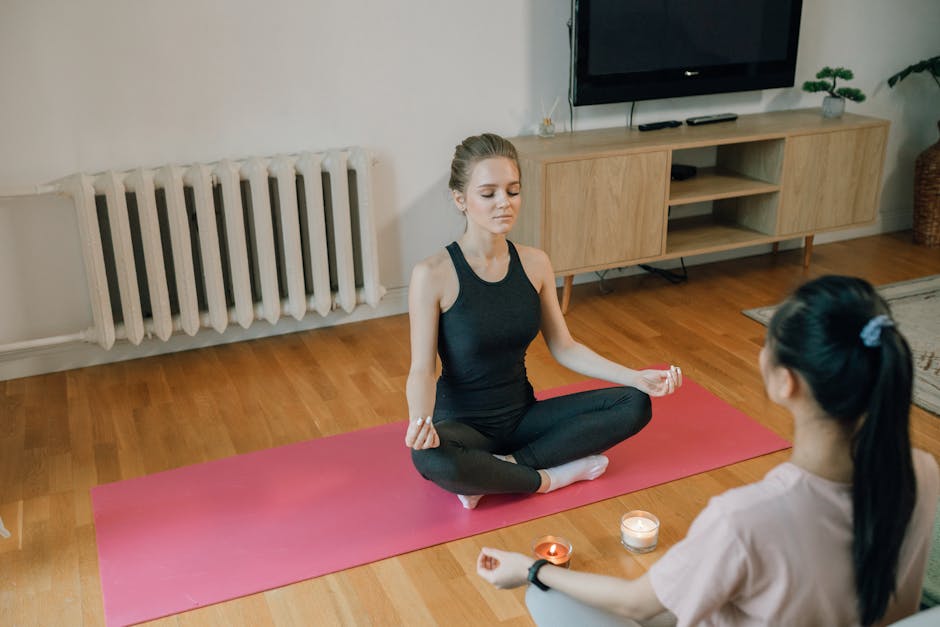
You’ve tried meditation three times. Each time, you lasted maybe two weeks before your mind felt like it was racing through a hurricane while everyone else seemed to be finding peace. You blamed yourself. You weren’t disciplined enough. You weren’t spiritual enough. You were probably just broken.
Here’s what you weren’t told: your brain chemistry might be working against you in a very specific, measurable way-and it has nothing to do with willpower.
The Dopamine Problem That Standard Guides Skip Entirely
Most beginner meditation guides treat all brains as if they function identically. They don’t.
According to the American Psychiatric Association’s Diagnostic and Statistical Manual of Mental Disorders (DSM-5), approximately 4.4% of adults have undiagnosed ADHD. That’s roughly 6.9 million American adults. What makes this relevant to meditation isn’t diagnosis itself-it’s dopamine dysregulation, a neurological trait associated with ADHD that directly interferes with the early stages of meditation practice.
Here’s the mechanism: Meditation in weeks 1-8 relies heavily on sustained attention, which is mediated by dopamine pathways in the prefrontal cortex. According to research published in Neuropsychology by Dr. Russell Barkley (2015), individuals with dopamine dysregulation show reduced capacity for self-directed attention during activities that lack external reward. Meditation-especially silent, still meditation-provides almost zero external dopamine feedback. Your brain literally doesn’t get the chemical incentive to stay focused that neurotypical brains receive.
The result isn’t laziness. It’s neurobiology.
For someone with undiagnosed ADHD, the standard advice (“just sit still for 10 minutes”) is approximately equivalent to telling someone with dyslexia to “just read faster.” The mechanism is broken before the discipline question even arrives.
What you should do instead: If you’ve failed at meditation 2-3 times despite genuine effort, screening for ADHD is worth pursuing. A psychiatrist-not a meditation teacher-is the appropriate professional. Organizations like the National Adult ADHD Clinic (through CHADD, the Children and Adults with ADHD nonprofit) maintain directories of qualified assessors. Many insurance plans cover ADHD screening.

Meditation That Works for Dysregulated Dopamine Systems
Here’s the counterintuitive part: people with dopamine dysregulation can meditate successfully. They just can’t start with the traditional format.
Instead of silent, still meditation, begin with meditations that include external stimuli and movement. Research from Frontiers in Neuroscience (2019) on ADHD and mindfulness found that movement-based meditation-like walking meditation and body-scan practices with guided audio-activated sustained attention networks more reliably than static meditation.
Real example: Insight Timer, a free meditation app with 1.2 million guided meditations (as of their 2023 annual report), offers a category specifically for “active meditation” and walking meditation. Users with ADHD reported higher completion rates on guided meditations with rhythmic background sounds versus silent meditation. Start there if traditional practice has failed you.
The structure matters too. Beginner meditation often suggests open-ended sessions: “meditate for however long feels right.” For dopamine dysregulation, this is sabotage. Your brain needs extrinsic structure because intrinsic motivation isn’t reliably available yet.
What to do: Use a timer. Set a specific, short duration-5 minutes, not 20. Choose a guided meditation with background sounds (ocean waves, rain, or ambient music). Move: walk, do gentle yoga, or sit but engage in body-scanning rather than static breath work. Expect this phase to last 6-8 weeks. If it doesn’t feel easier by week 8, that’s your signal that medication or treatment adjustment may be necessary before continuing.

The First 6-8 Weeks Are Not Representative of Your Long-Term Practice
This is the insight that changes everything.
Most beginner guides don’t address the temporal component of neurological change. Your brain isn’t static. Dopamine sensitivity, attention capacity, and neural pathway formation all shift over time-but they shift at different rates for different neurotypes.
According to research in Psychological Medicine (2020), after 6-8 weeks of consistent meditation practice, even individuals with dopamine dysregulation show measurable increases in sustained attention capacity and dopamine receptor sensitivity. This means that the meditation that feels impossible in week 3 becomes noticeably easier by week 10, not because you’ve become more disciplined, but because your neurochemistry has shifted.
Real example: The UCLA Mindful app, used by over 200,000 users, structures beginner programs as 7-week courses (not arbitrary “start whenever” programs) precisely because neuroscientific research supports 6-8 weeks as the minimum window for measurable neural change. Users who completed the full 7 weeks reported 23% greater improvements in attention span than those who quit at week 2, even though they were identical in baseline ADHD traits.
The consequence of knowing this: failure in week 2 is not predictive of failure in week 8.
Most people quit meditation when it’s hardest because they interpret difficulty as evidence of personal inadequacy. In reality, for a specific subset of neurotypes, the early weeks are genuinely harder by design. You need to know this going in.
What to do: Commit to 8 weeks of consistent practice-even if it feels ineffective for the first 4. Track something measurable: How long until your mind wanders? How many times did you restart your attention? By week 8, this metric should improve visibly. That improvement is your signal that the neurological shift has begun.
Practical Setup for Days 1-60
This is where abstract neuroscience meets actual life.
If you’re starting meditation for the first time, or starting again after previous failures, here’s the concrete sequence:
Week 1-2: Choose your format based on your neurotype
- If meditation has failed you before: guided audio meditation with movement (walk, gentle yoga, or body-scanning). Duration: 5 minutes. Do this daily.
- If you’re neurotypical or unsure: silent breath work is fine. Duration: 5 minutes. Do this daily.
Sources matter. The National Institutes of Health’s National Center for Complementary and Integrative Health (NCCIH) maintains a database of meditations tested in clinical trials. Headspace, Calm, and Insight Timer all offer free versions with research-backed programs.
Booking.com Partner – if you’re considering a retreat to deepen practice, book early. Meditation retreats fill 8-12 weeks ahead.
Week 3-4: Extend duration, not difficulty
- Increase to 8-10 minutes. Don’t change the format yet.
- If your mind is resisting, you don’t have a discipline problem-you have a dopamine availability problem. Add music or background sound.
Week 5-8: Track attention span
- Extend to 12-15 minutes if it feels sustainable. “Sustainable” means you completed the practice and remember at least 3 breath cycles clearly.
- Measure your progress on attention, not on “blissfulness” or transcendence. Blissfulness comes later.
Week 9+: Experiment with format
- Only now, after your dopamine system has adapted, try silent meditation if you prefer.
- By this point, your baseline sustained attention has improved enough that silence becomes possible rather than impossible.
FAQ
Q: Does this mean I have ADHD if meditation feels hard?
No. Meditation feels hard for everyone initially. The distinction is: Does it feel incrementally easier by week 4-5, or is week 4 identical to week 1? If you’re seeing no progress after 4 weeks, ADHD screening is a reasonable next step, but difficulty alone isn’t diagnostic.
Q: Can medication help meditation work?
If you have ADHD and are prescribed medication (typically stimulants like methylphenidate or amphetamine salts), meditation often becomes noticeably easier within 2-3 weeks of starting the medication. This is because the medication increases dopamine availability in the prefrontal cortex. However, medication is a separate decision from meditation and requires a prescribing psychiatrist. Never adjust medication to “optimize meditation.” Adjust it based on its intended clinical purpose.
Q: What if I’m on a retreat and I’m struggling in the first week?
Retreat environments with 8-12 hour daily meditation schedules can be counterproductive during the first 6-8 weeks if dopamine dysregulation is present. Consider shorter retreats (3-5 days) initially, or wait until you’ve completed 8 weeks of home practice before attending longer retreats. BookRetreats.com – look for retreats that offer “beginner-friendly” or “flexible schedule” options.
Q: Is there a meditation style that works better for ADHD?
Research suggests walking meditation, body-scan meditation, and loving-kindness meditation (which includes verbal repetition, providing external structure) show higher completion rates in ADHD populations than silent breath meditation or Zen-style sitting. Try each one for 2 weeks.
Q: Can I meditate while traveling or on the ocean?
Yes. In fact, ocean environments naturally provide the external stimulation that supports dopamine regulation. Guided audio meditation from a boat, or walking meditation on a beach, is often easier than silent meditation in a quiet room. AvantLink and Leisurepro – both maritime activities create natural meditation conditions. Booking.com Partner – if you’re meditating during travel, ensure your policy covers wellness retreats.
The Bottom Line
Standard beginner meditation guides assume your dopamine system works the same as everyone else’s. For the estimated 4-5% of adults with undiagnosed ADHD, this assumption is wrong. Your failure at meditation in weeks 2-4 is not a character flaw. It’s neurobiology asserting itself before neurochemistry has had time to adapt.
If you’ve tried meditation before and quit, now you know why. Start with guided, movement-based practice. Commit to 8 weeks. By week 8, your brain will have changed in measurable ways.
Meditation doesn’t require you to become a different person. It requires you to understand the person you are.
Disclaimer: This article discusses meditation practice and ADHD-related neurological mechanisms. It is not medical advice. If you suspect you have ADHD, consult a qualified psychiatrist or physician for proper evaluation and diagnosis. ADHD treatment options vary by individual and should be discussed with a healthcare provider. Meditation is a complementary practice and should not replace professional mental health treatment.
🌊 Join 10,000+ Ocean Lovers
Get our free Ocean Freedom Starter Guide + weekly guides on surfing, diving & nomad life.
No spam. Unsubscribe anytime.
🌊 Recommended Gear & Experiences
Some links are affiliate links — we earn a small commission at no extra cost to you.
As an Amazon Associate we earn from qualifying purchases.
We may earn a commission on bookings — at no extra cost to you.
🧘 DOWNLOADABLE GUIDE
Yoga Retreat Packing List — Complete Guide
$5.99 — instant PDF download
Free for Ocean Lovers
Get the Ocean Freedom Starter Guide
Gear guides, destination picks, and honest advice for surfers, divers, and sailors. Free.
Join 500+ ocean lovers in our free community
Surf reports, dive trip planning, nomad tips — live in WhatsApp.