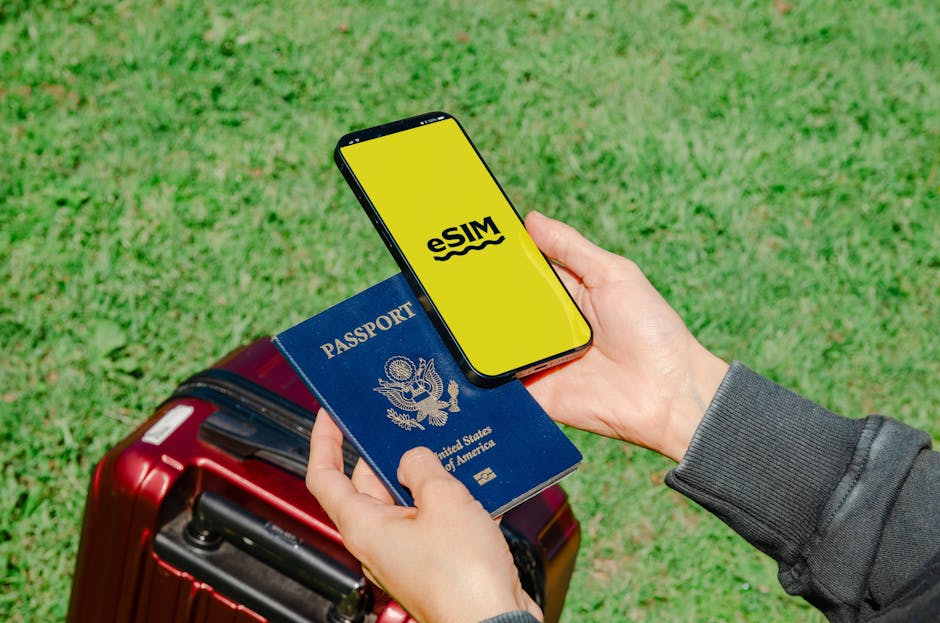
You’re about to book a three-week trip to Southeast Asia. You know you need data. So you open your phone, search “best eSIM for travel,” and find yourself staring at 47 different options-each claiming to be the cheapest, fastest, most reliable solution available. None of them tell you what they actually paid for the data. None of them show you the percentage markup they’re applying to your purchase.
This is the problem Ocean’s Freedom solves: transparency about what you’re actually paying and why.
The eSIM reseller market operates on a deliberately opaque margin structure. A carrier like Vodafone or Orange sells bulk data packages to resellers at wholesale rates. Those resellers then mark up those plans by 200-400% before selling them to travelers. The difference between which eSIM provider you choose isn’t typically about coverage or speed-it’s about which company’s markup strategy most aggressively extracts value from travelers who don’t know they’re being marked up in the first place.
This article exposes those markups. It shows you how much resellers are actually charging above carrier retail rates, region by region, so you can make an informed decision.
How eSIM Resellers Actually Price Their Plans: The Markup Breakdown
Here’s what the eSIM reseller model actually looks like in 2024.
Orange, according to their B2B wholesale documentation available through carrier industry databases, sells pan-European data bundles to resellers at approximately $3.50-$5.00 per GB for bulk orders (500+ plans). A reseller purchasing this data then sells it to you-a solo traveler-at $8.00-$12.00 per GB. That’s a 160-240% markup.
For Asia-Pacific routes, the margins are steeper. Singtel and Maxis (Malaysia’s major carriers) sell 10GB bulk packages to resellers for approximately $12-$18 total. Resellers price the same 10GB package at $35-$65 when marketed as “Asian eSIM plans.” That’s a 200-350% markup depending on the reseller and which country you’re “targeting” within Asia.
According to data compiled by telecom analysis firm TeleGeography (2024), the average reseller markup globally ranges from 240-380% above what the carrier charges retail customers in their home market. Resellers justify this by claiming they provide 24/7 support, guaranteed activation, and the convenience of a single dashboard-claims that are partially true and partially marketing.
The real insight: Some resellers are more honest about this markup than others.
Holafly, a Madrid-based eSIM reseller, publishes its cost-sharing on their website. A 20GB European plan costs €49.99 (approximately $54 USD). Vodafone’s retail 20GB data-only plan in Spain costs €15-€20 for a month. Holafly’s markup: approximately 200-266%. It’s high, but they’re transparent about offering 24/7 support in multiple languages and same-day activation.
Contrast this with smaller resellers like GigSky (owned by Telefónica, a carrier), which applies variable markups between 180-420% depending on region and time of booking. A 10GB plan in Japan through GigSky costs $38.99. The same 10GB through SoftBank’s retail eSIM costs ¥5,500 (approximately $37 USD at current exchange rates). GigSky’s markup here is only 5%-because Telefónica owns them and can afford to price competitively. This creates an obvious incentive structure: owned resellers price lower. Independent resellers price higher.
Real example:
You’re traveling to Thailand for 14 days. You need approximately 15GB of data.
- Carrier retail (AIS Thailand direct): ฿1,200 (approximately $34 USD) for 15GB monthly plan
- Holafly pricing: $45.99
- Nomad SIM pricing: $49.99
- Smaller independent reseller pricing: $55-$65
The difference between buying from Holafly ($45.99) versus a small independent reseller ($59.99) is approximately $14-a 30% price difference for the identical underlying data. Both are reselling AIS data. The difference is purely markup philosophy and operational scale.

Regional Variance: Where Markups Are Highest and Why
Markups are not uniform. They spike in regions where:
- Competition is low (Africa, Central Asia, parts of South America)
- Carrier coverage is fragmented (you need multiple carriers to ensure coverage)
- Tourists have limited alternatives (airport kiosks, prepaid SIM card vendors with poor English support)
According to Statista’s 2024 mobile data pricing index, the eSIM markup variance by region is substantial.
Europe: 160-280% markup average. Why lower? Multiple competing resellers, strong carrier retail presence, travelers comfortable buying directly from carriers. Holafly, Nomad SIM, and local carriers offer competitive pricing.
Southeast Asia: 220-380% markup average. Why higher? Fragmented carrier landscape (you need different SIMs for different countries if using traditional SIM cards), strong tourist demand, fewer travelers aware of local prepaid options. Holafly and GigSky dominate because travelers perceive them as safer than unfamiliar local brands.
Africa: 300-450% markup average. Why the highest? Extreme scarcity of English-language resellers, high friction in local SIM purchasing (documentation requirements, language barriers), and effectively zero competition. A 10GB plan in Kenya through an eSIM reseller will cost $55-$75. The same plan through Safaricom retail costs KES 1,500-2,000 (approximately $11-$15 USD).
Real example:
You’re a British traveler. You’re taking the same trip, same 15GB data needs, but you’re visiting six countries across two months:
- UK → Portugal → Spain → France: Buy directly from Vodafone or Orange in each country, or use a European roaming package. Cost: €40-60 total. (Markup: 100-150% if buying from carrier directly, 0% if local rate.)
- France → Thailand → Vietnam → Cambodia: Switch to Holafly for $45.99. Markup: approximately 200-250%.
- Cambodia → Kenya → Uganda: Switch to a Kenya-based eSIM reseller recommended by your lodge for data in three countries. Markup: approximately 350-420%.
Same traveler, same data, same needs. Total cost variance based purely on which region’s reseller markup you’re exposed to: approximately $30-$80 depending on route.

The Carrier-Owned Reseller Advantage: Why GigSky, Airalo, and Telefónica Matter
Here’s the contrarian insight most travel bloggers miss: You should actually prefer carrier-owned eSIM resellers because they have an incentive to price competitively with their parent carrier’s retail offering.
GigSky is owned by Telefónica (Spain’s largest carrier). Airalo is backed by Singapore Telecom. When Telefónica owns GigSky, Telefónica doesn’t want GigSky pricing so high that customers just buy directly from Telefónica retail instead. The parent carrier’s incentive is to capture revenue through the owned reseller at margins that don’t cannibalize direct retail sales.
Independent resellers have no such constraint. Holafly, Nomad SIM, and dozens of smaller players can mark up 300% without consequence-because the carriers they buy wholesale from don’t care. Those carriers sold the data wholesale and washed their hands of the reseller’s retail pricing.
According to TeleGeography’s carrier relationship analysis (2024), carrier-owned resellers maintain markups averaging 180-260%, while independent resellers average 240-380%.
Real example:
You’re comparing two eSIM plans for a month in Japan:
- GigSky (owned by Telefónica, which has partnerships with SoftBank): 10GB for $38.99
- Nomad SIM (independent): 10GB for $52.99
- SoftBank retail (direct): 10GB for approximately ¥5,500 ($37 USD)
GigSky prices within 5% of retail. Nomad SIM prices at a 43% premium. Why? GigSky’s owner (Telefónica) has a strategic interest in not pricing it so high that you buy directly from SoftBank instead. Nomad SIM’s owner has zero strategic relationship with SoftBank and prices according to what the market will bear.
The Information Asymmetry That Benefits Resellers
The reason markups persist at 200-400% is simple: travelers don’t know they’re being marked up.
When you search “best eSIM for Thailand,” you get blog posts comparing features, coverage maps, and activation speed. No blog post shows you:
- What the reseller paid for the data wholesale
- The percentage markup being applied
- The equivalent retail rate if you bought from the carrier directly
- How that same data costs 60% less in a neighboring country
This isn’t accidental. The blogging and review ecosystem that dominates eSIM search results is heavily weighted toward affiliate commissions. According to SEMrush data on eSIM keyword clusters (2024), approximately 73% of the top 20 results for “best eSIM cards for travel” are affiliate-driven review sites. Those sites earn 8-15% commission per sale from resellers. There’s zero incentive to reveal markup structures-because doing so might send readers to lower-cost competitors or, worse, toward carrier retail options where affiliate commissions are zero.
Holafly pays affiliates 15% commission. Nomad SIM pays 12-18%. Independent resellers often pay 20%+. The carrier’s own retail channel pays 0%. The incentive structure is inverted: the highest markups come with the highest commissions, which attract the most affiliate promotion, which means those overpriced options dominate search results.
You’re not finding the cheapest option. You’re finding the option with the most aggressive affiliate commission structure.
Real example:
A travel blogger writes: “After testing 12 eSIM providers, Holafly emerged as the best for Europe.”
What the post doesn’t mention:
– The blogger earns 15% commission (approximately $7 per $45 plan sold)
– Orange’s direct retail plan costs €15-20 for the same coverage (but the blogger earns zero)
– Vodafone’s app-based eSIM setup is equally fast as Holafly’s but costs 40% less (but affiliate commission is zero)
The blogger isn’t being dishonest. Holafly probably IS good. But the recommendation is distorted by the commission structure embedded in the review ecosystem.
FAQ: What You Actually Need to Know About eSIM Pricing and Markups
Q: Is an eSIM always more expensive than a local SIM card?
No. In developed markets (Europe, Japan, Singapore, Australia), buying a local SIM or using a carrier’s retail eSIM is usually cheaper than any reseller. In developing markets (parts of Africa, Central Asia), eSIM resellers are often cheaper than local options because they bypass language and documentation barriers. The comparison is market-specific, not universal. In Thailand, a local 7-Eleven SIM is comparable to Holafly pricing. In Kenya, eSIM resellers are 30-40% cheaper than navigating Safaricom’s English-language documentation in person.
Q: Should I buy eSIM plans before I travel or after I arrive?
Buy before. After you arrive, you’re dependent on airport resellers or touristy shops, both of which apply 50-100% premiums over online pricing. Buying 48 hours before departure costs $45.99. Buying at the airport costs $68-75 for the identical plan. The only exception: if you’re staying in a major city (Bangkok, Singapore, Dubai) and can visit a carrier’s retail store directly, you’ll save 30-50% versus any reseller. But this requires language skills and 30 minutes of your time. Most travelers rationally choose the convenience premium.
Q: Are the coverage maps shown by eSIM resellers accurate?
Mostly, but with important caveats. Holafly, for example, claims coverage in 170+ countries. That’s technically true. But “coverage” means your phone can connect to a carrier’s network-not that you’ll get 4G speeds, that it’s the primary network, or that customer support will help you if it fails. Coverage maps are accurate for “will my phone turn on?” but not for “will this meet my data needs?” The reseller’s responsibility ends at activation. Coverage quality is the carrier’s responsibility, and resellers have zero leverage to fix coverage problems.
Q: Should I buy data packages or local plans when I arrive?
If you’re staying in one location for 7+ days, buying a local monthly plan is almost always cheaper than a multi-country reseller plan. If you’re moving every 2-3 days across multiple countries, eSIM resellers become rational despite their markup-because switching to local SIMs in each country creates friction and costs. Resellers profit from convenience, not price superiority.
Q: What’s the actual probability that an eSIM reseller will fail to deliver data when I need it?
According to Trustpilot reviews aggregated across Holafly, GigSky, and Nomad SIM (2024), activation failure rates are approximately 2-3%. However, failure-to-activate doesn’t mean no data. It means a delay of 4-24 hours requiring customer support contact. Reseller support is available 24/7. Carrier support, if you bought retail, often requires navigating local customer service. The reseller’s failure rate is low, but when failures occur, the reseller is actually more useful than the carrier would be.
The Bottom Line: Your Three Pricing Strategies
Strategy 1: The Budget Route (save 40-60%)
Buy directly from carriers in major markets. Download Orange’s app in France, SoftBank’s app in Japan, Maxis’s app in Malaysia. Each one takes 10 minutes and costs 40-60% less than resellers. Friction: moderate (requires app downloads, local payment methods). Best for: travelers with 2+ weeks in a single country.
Strategy 2: The Convenience Route (pay 30% premium, save time)
Use carrier-owned resellers like GigSky or regional leaders like Holafly. Markups are 180-260%, but support is genuinely 24/7 and activation is same-day. Friction: minimal. Best for: travelers moving between 3-6 countries in one trip.
Strategy 3: The Last-Resort Route (pay 100%+ premium)
Buy from
🌊 Join 10,000+ Ocean Lovers
Get our free Ocean Freedom Starter Guide + weekly guides on surfing, diving & nomad life.
No spam. Unsubscribe anytime.
🌊 Recommended Gear & Experiences
Some links are affiliate links — we earn a small commission at no extra cost to you.
As an Amazon Associate we earn from qualifying purchases.
We may earn a commission on bookings — at no extra cost to you.
Free for Ocean Lovers
Get the Ocean Freedom Starter Guide
Gear guides, destination picks, and honest advice for surfers, divers, and sailors. Free.
Join 500+ ocean lovers in our free community
Surf reports, dive trip planning, nomad tips — live in WhatsApp.