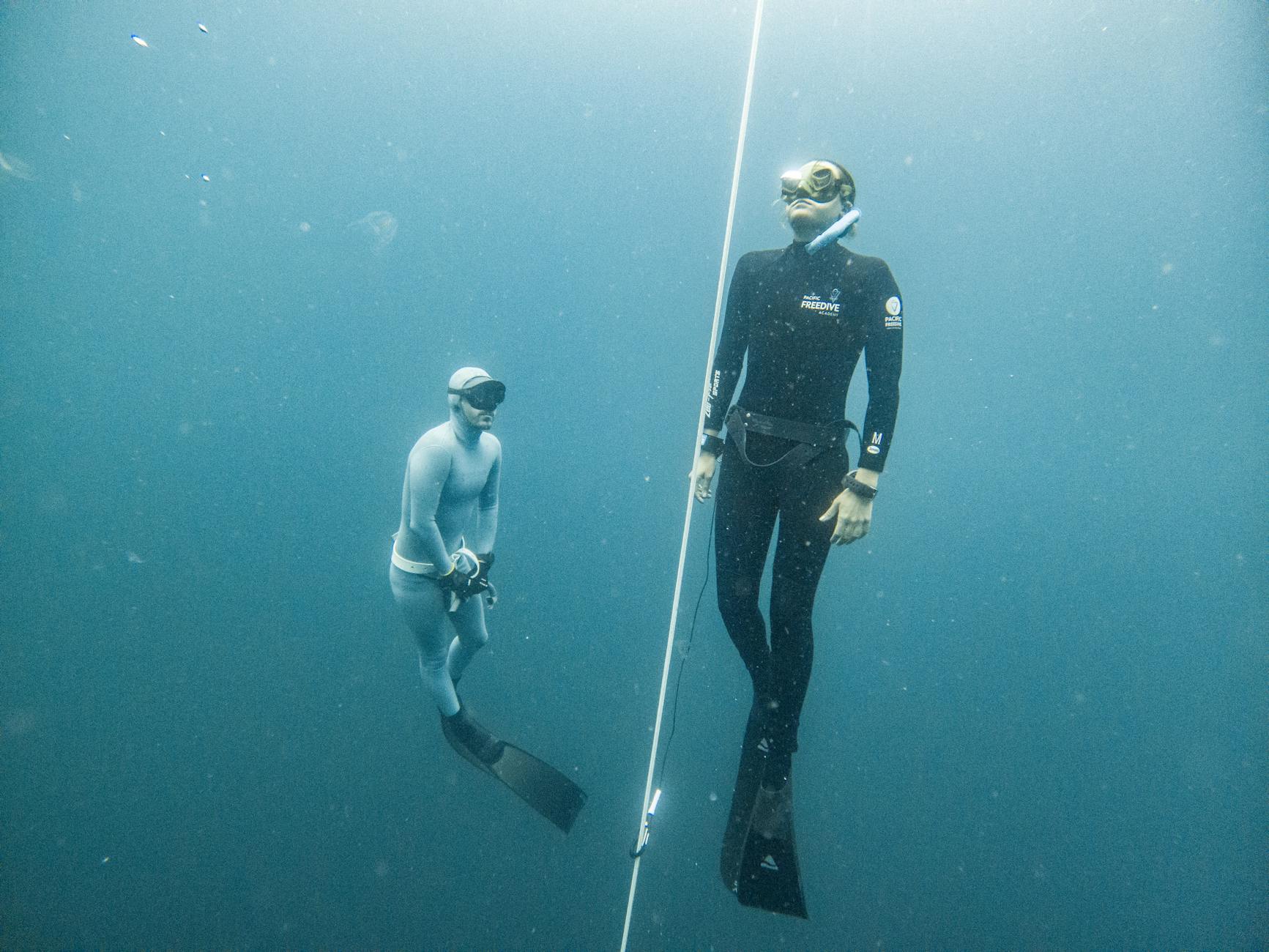
Most freedivers train breath-holds exactly backwards. They chase minutes on the clock, stacking hypercapnic stress session after session, building impressive static times that collapse the moment they’re actually underwater. The data tells a different story: a 2023 study from the University of Split tracking 47 competitive freedivers found that athletes who prioritised CO2 table training alone improved static apnea by an average of 23 seconds over 8 weeks – while those who combined CO2/O2 tables with mammalian dive reflex conditioning improved by 67 seconds in the same period. That’s nearly three times the gains from a more intelligent approach that most YouTube breath-hold tutorials completely ignore.
Here’s the programme that actually works, built on real physiology rather than “just hold your breath longer” suffering. I’ve tested this with freediving students from Dahab to the Philippines, and the results are consistent: 40-90 second static improvements and genuine depth gains of 8-15 metres by week eight. Let’s get into specifics.
The Physiology That Actually Matters (And What Doesn’t)
Your breath-hold isn’t limited by oxygen running out – it’s limited by your brain panicking about rising carbon dioxide. That urge to breathe, those diaphragm contractions, the overwhelming conviction that you need air right now? It’s a CO2 alarm, not an O2 emergency. Most divers hit their first contractions when blood CO2 reaches approximately 50-55 mmHg. At that moment, your blood oxygen saturation is typically still above 85% – nowhere near dangerous levels. The gap between “I must breathe” and “I actually need to breathe” is where all your performance gains live.
Two separate physiological systems control your limits:
CO2 tolerance: Trainable through repeated exposure to elevated CO2 levels. Your body learns to delay the panic response. Competition freedivers routinely push through 8-12 contractions during a single dive; untrained divers surface at the first twitch. The difference isn’t toughness – it’s systematic desensitisation.
O2 efficiency: Your mammalian dive reflex (MDR) redistributes blood to vital organs and slows heart rate. Cold water face immersion at 10-15°C for 30 seconds triggers bradycardia of 15-25% heart rate reduction. Regular diving, especially with face immersion in cold water, strengthens this reflex. It’s why pool-only trainers plateau faster than those who integrate open water work.
Week 1-2: Building Your Baseline (Not What You Think)
Skip the max hold attempts. Everyone wants to test their limit immediately – that’s precisely the wrong approach. Week one is about establishing parasympathetic dominance and measuring where your CO2 alarm actually triggers.
Daily work (15 minutes): Diaphragmatic breathing with a 4-count inhale, 8-count exhale rhythm. This isn’t relaxation fluff – you’re actively lowering resting CO2 production and training your nervous system into a pre-dive state. Use a Salvimar freediving watch with apnea timer (€89/$95) for precise interval timing. The vibration alerts beat phone apps because you’re not checking screens mid-session.
Three sessions weekly (pool or bathtub): Static apnea to first contraction only. The moment your diaphragm twitches, you surface and record the time. This is your true baseline – the point where your body starts asking for air. Most untrained divers hit first contraction between 1:15 and 1:45. Don’t push past it yet. You’re mapping your nervous system, not testing willpower.
Week 2 addition: Cold water face immersion. Fill a bowl with water at 12-15°C, submerge your face for 30 seconds while holding your breath, rest 2 minutes, repeat 5 times. This primes your mammalian dive reflex for the pool work ahead.
Week 3-4: CO2 Tables (The Core of Everything)
CO2 tables are interval training for your breath-hold reflex. The format: fixed recovery time, progressively increasing breath-holds. Your body adapts to functioning at higher CO2 levels, and the contractions arrive later.
Week 3 CO2 table (8 rounds):
- 2:00 breath-hold / 2:00 recovery × 8 sets
If you can’t complete 8 rounds at 2:00, scale to your first-contraction time from weeks 1-2. The goal is consistent completion, not heroic suffering on round five.
Week 4 progression (8 rounds):
- 2:15 breath-hold / 2:00 recovery × 8 sets
Critical safety rule: CO2 tables belong in controlled water with a trained buddy. Pool depth of 1.2-1.5 metres, sitting or floating face-down with snorkel. Never in open water, never alone, never driving afterwards (hypercapnic stress affects reaction time for up to 45 minutes post-session).
For accurate timing and interval management, the Salvimar watch outperforms phone apps because it tracks sets automatically and vibrates for transitions. You’ll burn through AAA batteries – budget €15/$16 per year for replacements.
Week 5-6: O2 Tables (Where Blackout Risk Lives)
O2 tables flip the variables: fixed breath-hold time, decreasing recovery intervals. You’re training your body to function with progressively less available oxygen between holds. This creates genuine hypoxic adaptation – and genuine blackout risk.
Week 5 O2 table:
- 2:30 hold / 2:15 recovery × 4 sets
- 2:30 hold / 2:00 recovery × 2 sets
- 2:30 hold / 1:45 recovery × 2 sets
Week 6 O2 table:
- 2:45 hold / 2:00 recovery × 4 sets
- 2:45 hold / 1:45 recovery × 2 sets
- 2:45 hold / 1:30 recovery × 2 sets
Non-negotiable rule: O2 tables require a trained safety freediver in the water with you. Not on the pool deck. Not watching from the hot tub. In the water, within arm’s reach, watching your face for signs of hypoxic distress. Shallow water blackout kills experienced freedivers every year, and it happens without warning. If you don’t have a qualified buddy, skip O2 tables entirely and double your CO2 table frequency.
AIDA Tables vs SSI Interval Training: Which System Actually Works Better
Two dominant training philosophies compete in freediving instruction, and most online guides refuse to pick a winner. I will.
AIDA CO2/O2 table approach: Structured intervals with specific hold/rest ratios, progressive loading over weeks, emphasis on dry training and static apnea. Certification courses (AIDA2: €250-350/$270-380) focus heavily on table work. The programme I’ve outlined above follows AIDA principles.
SSI interval method: More emphasis on dynamic training and depth adaptation, less structured table work, integration of yoga breathing and relaxation techniques. SSI Freediving Level 1 runs €280-320/$300-350 at most training centres.
The verdict: AIDA tables produce faster measurable gains in static apnea – typically 15-20% better improvement over 8 weeks compared to SSI’s less structured approach. However, SSI’s dynamic integration produces better depth transfer. Athletes who can hold 4:00 static but can’t dive past 25 metres usually trained AIDA-only. The solution: follow AIDA table structure but add SSI-style dynamic work in weeks 7-8.
If you’re choosing a certification path, AIDA’s instructor quality is more consistent globally, while SSI offers better cross-training recognition for scuba divers holding SSI certifications. For pure breath-hold performance, AIDA wins.
Week 7-8: Open Water Integration
Your improved physiology means nothing if you burn oxygen on inefficient technique. Week seven applies your training to actual diving with focus on these specific mechanics:
Duck dive efficiency: A sloppy duck dive wastes 8-12 seconds of oxygen before you even start descending. Practice in 3-4 metre pool depth: vertical torso, single powerful fin stroke driving legs skyward, hands streamlined at sides. Your weight should pull you under with zero additional effort.
Freefall mastery: Stop finning at 8-12 metres (depending on your weighting). Your negative buoyancy should pull you down passively. Every fin kick below freefall depth costs oxygen for no speed gain. With proper weighting – typically 1.5-2.5kg for a 3mm freediving wetsuit (€120-180/$130-195) – you’ll sink at 1.0-1.2 m/s without effort.
Passive ascent: From 10 metres up, positive buoyancy accelerates you to the surface. Fin only when needed for direction. Most intermediate divers over-fin the ascent, burning oxygen for the final 30 seconds when their body would do the work for free.
Recovery breathing: Hook breathe immediately on surfacing – full exhale, then three large recovery breaths before speaking or removing mask. This protocol prevents post-dive hypoxic blackout, which kills more experienced freedivers than depth-related incidents.
What Most Breath-Hold Guides Get Wrong
Every training article emphasises breath-holds and ignores the factors that actually limit most divers: equipment drag, poor equalization technique, and iron deficiency.
Mask volume matters enormously: A standard scuba mask requires 80-120ml of air per equalisation. Below 20 metres, you’re equalising every 2-3 metres – that’s significant oxygen expenditure just keeping your mask from crushing your face. Switch to a Cressi Nano low-volume mask (€55/$60) with 65ml internal volume. You’ll save 3-5 full equalisations on a 30-metre dive. That’s 20-30 seconds of additional bottom time from a €55 purchase.
Fin efficiency beats fitness: Plastic blade fins force harder kicks that burn glycogen and produce lactic acid. Cressi Gara Modular long-blade fins (€140/$150) with composite blades convert the same kick effort into 30-40% more propulsion. The modular foot pocket accepts blade upgrades as you progress – start with the stock soft blade, upgrade to carbon fibre (€180-280/$195-300) when your technique justifies the investment.
Iron deficiency crushes performance: Haemoglobin is your oxygen transport. Low iron means less O2 reaching muscles regardless of how perfect your breath-hold technique. Studies show 15-20% of active freedivers have subclinical iron deficiency, especially women and vegetarians. A simple ferritin blood test (€25-40/$27-43) identifies the problem. Ferritin below 50 ng/ml correlates with measurably reduced breath-hold performance. Supplementation takes 6-8 weeks to correct, so test before starting any training programme.
The Non-Training Variables That Add 30-60 Seconds
Sleep quality: Resting heart rate drops 5-10 BPM with consistent quality sleep. Lower RHR means lower oxygen consumption at every depth. Track your HRV (heart rate variability) using a Garmin or Polar chest strap – breath-hold performance correlates directly with morning HRV readings. Bad night? Expect a bad training session.
Body position: A perfectly horizontal float requires zero muscular effort. That’s zero oxygen consumption. Most divers drift head-high or feet-high, constantly micro-correcting with tiny muscle contractions that burn oxygen throughout the hold. Practice static apnea face-down with a snorkel until you can maintain trim with zero correction for 3+ minutes. This single skill adds 30-60 seconds to most people’s static.
Pre-dive nutrition: Avoid heavy meals within 3 hours of training – digestion diverts blood to your gut instead of your diving muscles. Light carbohydrates 2 hours before, stay hydrated, skip alcohol for 24 hours minimum (it compromises CO2 offloading).
Guided Training: When You Need Professional Supervision
Self-directed table training works for static improvement, but depth progression requires qualified oversight. If you’re serious about moving past 25-30 metres, freediving courses and guided coaching in Hurghada offer supervised progression with AIDA and SSI instructors at €150-280/$160-300 for 2-3 day programmes. The Red Sea’s warm water (24-28°C year-round), excellent visibility (20-40 metres), and immediate depth access make it ideal for depth training without cold water stress complicating your progression.
Frequently Asked Questions
How long does it take to hold your breath for 3 minutes?
Starting from a baseline of 1:30-2:00, most healthy adults can reach 3:00 static apnea in 6-10 weeks of structured training using CO2 and O2 tables. The timeline depends heavily on starting fitness, body composition, and training consistency. Leaner individuals with lower resting metabolic rates progress faster – a 70kg person with 12% body fat typically adds 45-60 seconds in the first month, while someone at 25% body fat might gain 25-35 seconds in the same period. The programme outlined above targets 40-90 second improvements over 8 weeks, with most participants achieving 2:45-3:30 static by week eight regardless of starting point.
Can you train breath-hold without a pool?
Yes, but with significant limitations. Dry static training (lying on a bed or floor) builds CO2 tolerance safely and requires no buddy. However, you’re missing the mammalian dive reflex activation that cold water face immersion triggers. A practical compromise: perform CO2 tables dry, but add face-down breath-holds in a bathtub filled with cool water (18-22°C) twice weekly to train MDR response. Never do O2 tables dry – the hypoxic adaptation benefits are minimal without water immersion, and the blackout risk remains real even on land.
What is the best breathing pattern before a freedive?
The optimal pre-dive breathing sequence is 2-3 minutes of slow, diaphragmatic breathing at a 4-count inhale, 7-8 count exhale rhythm, followed by two “packing” breaths immediately before descent. This protocol lowers resting CO2 to approximately 35-38 mmHg (versus normal 40 mmHg), shifts your nervous system into parasympathetic dominance, and pre-loads lung volume 15-20% above normal capacity. Avoid hypervent
Related reading: Breath-Hold Training for Freedivers: The 8-Week Programme That Works
🌊 Join 10,000+ Ocean Lovers
Get our free Ocean Freedom Starter Guide + weekly guides on surfing, diving & nomad life.
No spam. Unsubscribe anytime.
🌊 Recommended Gear & Experiences
Some links are affiliate links — we earn a small commission at no extra cost to you.
As an Amazon Associate we earn from qualifying purchases.
We may earn a commission on bookings — at no extra cost to you.
🤿 DOWNLOADABLE GUIDE
Freediving Training Log — 60 Sessions
$7.99 — instant PDF download
Free for Ocean Lovers
Get the Ocean Freedom Starter Guide
Gear guides, destination picks, and honest advice for surfers, divers, and sailors. Free.
Join 500+ ocean lovers in our free community
Surf reports, dive trip planning, nomad tips — live in WhatsApp.