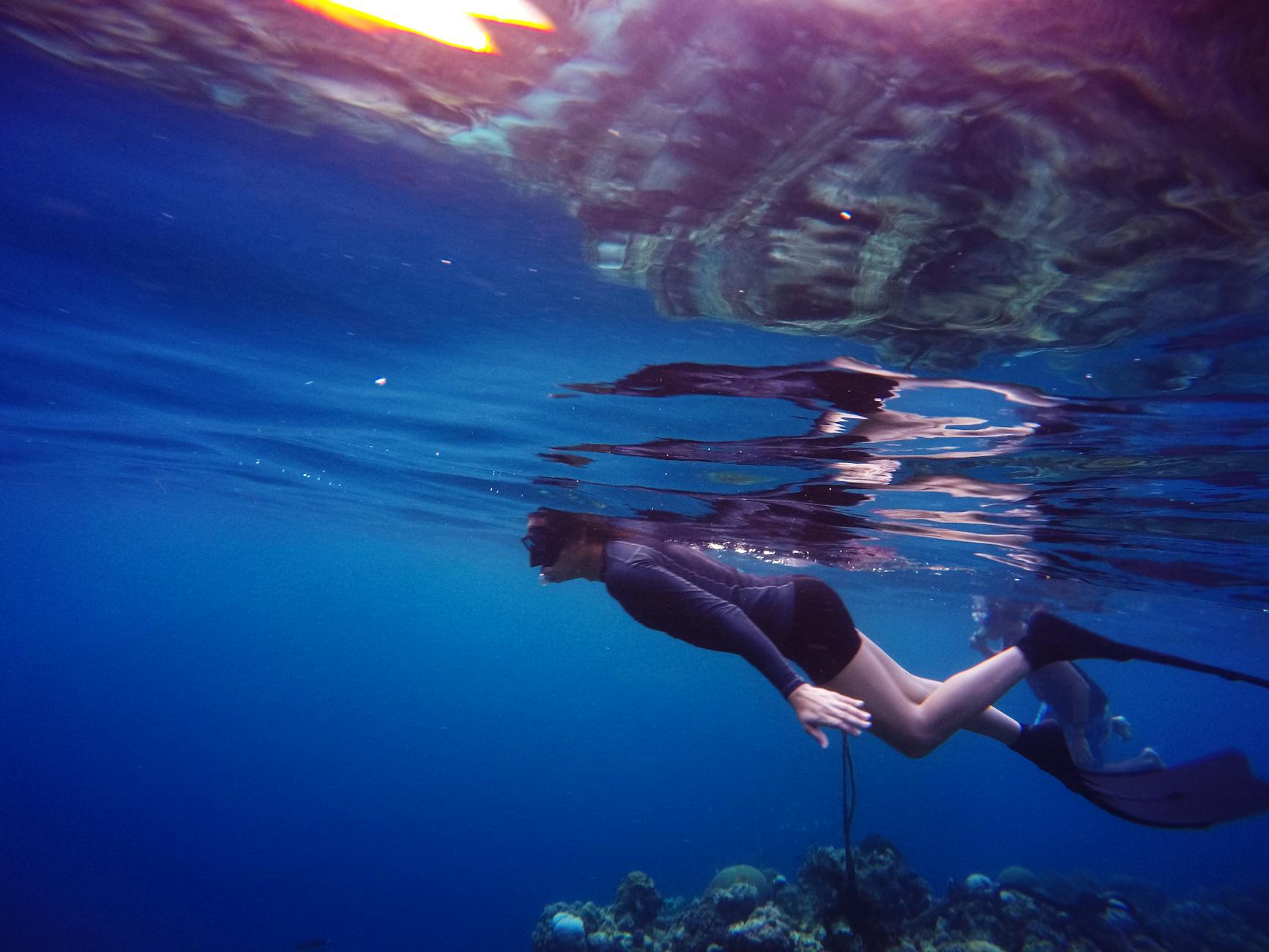
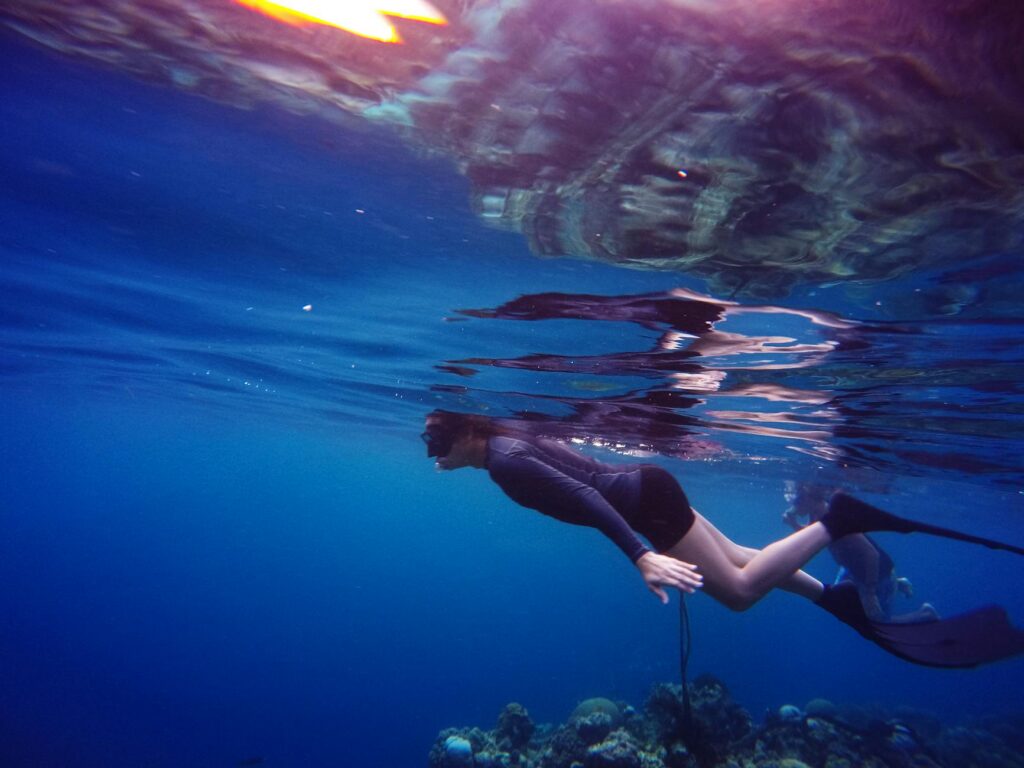
Everyone tells you the Maldives is the world’s best freediving destination. They’re half right – and completely wrong about when to go. The standard advice says November to April for calm seas and clear water. But here’s what nobody mentions: the most spectacular freediving encounters happen during the “wrong” season, and the 2026 booking landscape has shifted dramatically since 2024. Liveaboard operators report 40% of their peak-season berths for 2026 already sold out as of early 2025, with prices climbing 15-20% compared to two years ago. A week-long budget liveaboard that cost $1,500 in 2024 now runs $1,750-1,900 (€1,610-1,750), and luxury vessels have breached the $5,000 (€4,600) mark.
The real decision isn’t whether to visit the Maldives – it’s whether you’re chasing mantas or whale sharks, because optimising for both in a single trip is nearly impossible. Water temperatures hover at 27-29°C year-round, visibility regularly exceeds 30 metres, and the megafauna menu reads like a freediver’s fever dream: whale sharks, manta rays, hammerheads, tiger sharks, and thresher sharks. But each species has its own calendar, and the guides who tell you “any time is great” are leaving money on the table – yours.
The Sites That Actually Matter for Freedivers
Hanifaru Bay, Baa Atoll – The Manta Phenomenon
Hanifaru Bay isn’t just good – it’s arguably the single greatest marine spectacle accessible to freedivers anywhere on earth. During peak season (June through October), the southwest monsoon drives plankton-rich water into this small bay, and manta rays respond by aggregating in numbers that defy belief. On exceptional days, researchers have counted over 200 mantas feeding simultaneously – barrel-rolling, somersaulting, and chain-feeding in hypnotic loops.
Here’s the crucial detail most articles bury: scuba diving is completely banned in Hanifaru Bay to protect the mantas. This means freedivers and snorkellers have exclusive access to one of the planet’s top-tier marine encounters. Hanifaru Bay snorkelling and freediving day trips depart from Dharavandhoo island, typically costing $150-200 (€138-184) per person including park fees of $50 (€46). The UNESCO Biosphere Reserve status means strict visitor caps – only 60 people in the water at any time – so booking weeks ahead for June-October is essential, not optional.
South Ari Atoll – Year-Round Whale Sharks
South Ari Atoll holds a distinction no other location on earth can claim: a resident, year-round population of whale sharks. These aren’t seasonal migrants – they’re juvenile males, typically 4-6 metres long, that have made the atoll’s plankton-rich waters their permanent home. The feeding behaviour is surface-oriented, which means freedivers can match pace with a whale shark at 2-5 metres depth, gliding alongside without the bubble noise and time pressure of scuba.
Whale shark freediving experiences in Ari Atoll run $180-250 (€165-230) for half-day excursions, with encounter rates exceeding 90% during peak visibility months (January-April). The Maldives Whale Shark Research Programme has photo-identified over 500 individuals in this area alone, making it one of the most studied populations globally.
Maaya Thila, North Ari Atoll – The Shark Pinnacle
Maaya Thila is famous among scuba divers for its night dives, but freedivers should arrive at dawn. This submerged pinnacle tops out at just 6 metres and drops to 30+ metres on all sides, creating a vertical playground patrolled by white-tip reef sharks, grey reef sharks, eagle rays, and massive napoleon wrasse. The shallow summit allows multiple dives with 2-3 minute surface intervals, and early morning light creates visibility often exceeding 35 metres.
The site’s accessibility from North Ari resorts makes it a staple of Maldives liveaboard freediving expeditions, with most itineraries including at least one morning session here.
What Most Guides Get Wrong About Maldives Freediving
The conventional wisdom says avoid the wet season (May-October) – rough seas, reduced visibility, unpredictable conditions. This advice is perfectly accurate for scuba diving and catastrophically wrong for freediving.
The wet season delivers the Hanifaru Bay manta aggregations, which simply don’t happen November-April. It brings nutrient upwellings that attract whale sharks to feeding grounds they ignore during the “dry” season. And here’s the part nobody tells you: the southwest monsoon affects the east side of atolls, but the west side remains protected. Liveaboards repositioning to western sites access pristine reefs that see almost no visitors during these months.
The visibility narrative is also oversimplified. Yes, wet season visibility averages 20-25 metres versus 30-40 metres in dry season. But 20+ metres of visibility is exceptional by global standards – it’s better than the Red Sea on an average day. The “reduced visibility” of the Maldives wet season would be considered spectacular in Indonesia, the Philippines, or anywhere in the Caribbean.
Seasonal pricing reflects this misunderstanding. A liveaboard berth that costs $2,800 in February runs $2,000-2,200 in July – a 20-25% discount for access to encounters you literally cannot experience during “peak” season.
Resort vs Liveaboard: The Honest Comparison
This isn’t a “both are great depending on your preferences” situation. For serious freedivers, one option is clearly superior – and it depends entirely on your depth capability and financial reality.
Resort-Based Freediving
Most 4- and 5-star Maldives resorts operate dive centres with freediving packages, typically $80-150 (€74-138) per day including equipment and guided sessions. The headline advantage: unlimited house reef access. Many resort reefs drop to 15-25 metres within 50 metres of shore, allowing dawn and dusk sessions when the water reaches peak clarity and predator activity increases. The Anantara Kihavah, Conrad Maldives Rangali, and Soneva Fushi all offer dedicated freediving programmes with AIDA-certified instructors.
The downside is brutal: you’re confined to a single reef, and the megafauna encounters require expensive day-trip add-ons. A resort stay averaging $500-800/night (€460-735) plus $200+ day trips quickly exceeds liveaboard costs while delivering fewer sites.
Liveaboard Expeditions
Liveaboards access outer atolls – deeper walls, cleaning stations, and channel dives that house-reef proximity simply can’t match. Week-long itineraries range from $1,750 (€1,610) for budget vessels to $5,000+ (€4,600+) for luxury operations like the Carpe Diem Maldives or the Scubaspa Ying. The critical variable: freediver-friendliness. Many liveaboards prioritise scuba schedules, with freedivers squeezed into awkward time slots or banned from certain sites.
The verdict: If you can dive below 20 metres and want maximum site variety, liveaboards deliver dramatically better value. If you’re training or prefer unlimited shallow sessions without schedule pressure, resort diving makes sense – but budget $400+/day (€368+) all-in, not the $150/day equipment-only quotes.
Equalisation Challenges Specific to the Maldives
The Maldives presents one equalisation challenge most tropical destinations don’t: pronounced haloclines. These layers where different-salinity water meets (typically at 8-15 metres) cause momentary disorientation and can affect ear pressure in ways that catch unprepared divers off-guard.
If you’re still using Valsalva equalisation (pinching your nose and blowing), you’ll hit a hard wall around 15-20 metres. The technique simply fails at depth because it relies on air pressure that decreases as you descend. Frenzel equalisation – using tongue position to compress air already in the nasal cavity – works at any depth and is non-negotiable for dives below 20 metres.
Book a Frenzel-focused training session before your trip. Online courses run $50-100 (€46-92), but in-person coaching with a freediving instructor ($150-250/session) catches technical errors that video feedback misses. Two sessions before departure can add 5-10 metres to your comfortable maximum depth.
Essential Gear for Maldives Freediving
Water temperature means minimal thermal protection, but equipment choices still matter significantly for performance and protection.
Cressi Gara Modular freediving fins remain the gold-standard entry point – long-blade efficiency without the $400+ price tag of carbon fibre. The modular foot pocket means upgrading blades later without replacing the entire fin. At around $130 (€120), they outperform $200+ alternatives from most competitors.
For exposure protection, the Beuchat Elios 1.5mm tropical freediving suit ($180-220 / €165-200) provides UV protection and surface warmth without the buoyancy complications of thicker neoprene. At 27-29°C, anything heavier than 2mm creates negative buoyancy issues at depth.
Mask choice matters more than most freedivers realise. The Cressi Nano mask ($50 / €46) has become the industry standard for good reason: its ultra-low internal volume (45ml) means minimal air required for equalisation, extending comfortable depth by 2-5 metres for intermediate divers.
For footage, a GoPro with dive housing is rated to 60 metres and handles manta and whale shark encounters without the bulk of dedicated underwater housings. Pair it with a red filter for colour correction below 10 metres.
The Maldives now enforces reef-safe sunscreen requirements at most resorts and protected sites, banning oxybenzone and octinoxate formulations. Bring mineral-based options from home – local prices run 3-4x international retail.
Booking Strategy for 2026
The Maldives booking window has compressed significantly. In 2022, booking 6 months ahead secured most options. In 2026, premium liveaboard berths and Hanifaru Bay permits require 10-14 months advance booking for peak season dates.
For wet season (May-October) focused on mantas, book by January 2026 for June-September dates. For dry season whale shark trips, book by August 2025 for January-March 2026 availability. Payment structures have also shifted: most operators now require 50% deposit at booking (up from 30%) with final payment 90 days before departure.
Frequently Asked Questions
What is the best month to freedive in the Maldives?
There’s no single “best” month – it depends entirely on your target species. For whale shark encounters with maximum visibility (30-40 metres), January through March offers the most consistent conditions in South Ari Atoll. For manta ray aggregations at Hanifaru Bay, August and September deliver the highest concentrations, with 100+ mantas common on good days. If you want both encounters in a single trip, October offers a narrow overlap window: late-season mantas at Hanifaru combined with improving visibility for whale sharks. Water temperature remains 27-29°C regardless of month, so thermal comfort isn’t a seasonal factor.
How much does a freediving trip to the Maldives cost in 2026?
Budget a minimum of $3,500-4,000 (€3,220-3,680) for a one-week trip including international flights, accommodation, and guided freediving. This breaks down approximately as: flights $800-1,400 (€735-1,290) depending on origin, liveaboard $1,750-2,500 (€1,610-2,300), domestic transfers $200-400 (€184-368), and equipment/tips $200-300 (€184-276). Luxury options easily reach $8,000-10,000 (€7,360-9,200) for premium liveaboards or 5-star resort packages. Solo travellers face single supplement charges of 50-75% on most liveaboards, making shared cabin arrangements significantly more economical.
Do I need freediving certification to dive in the Maldives?
No certification is legally required for recreational freediving in the Maldives, but practical access differs significantly. Most guided whale shark and manta excursions accept uncertified snorkellers. However, liveaboard operators increasingly require AIDA 2 or SSI Freediver certification (or equivalent) for access to deeper sites and independent diving privileges. Certification demonstrates 16+ metre competence and rescue skills, which operators view as liability protection. If you’re planning a dedicated freediving trip, completing at least AIDA 2 before arrival opens substantially more site options and may qualify you for reduced guide ratios.
Is the Maldives suitable for beginner freedivers?
Absolutely – with appropriate expectations. The warm water, excellent visibility, and shallow reef systems make the Maldives exceptional for beginners building confidence and technique. Many of the best manta and whale shark encounters happen at 3-8 metres depth, well within beginner range. The limitations are logistical: budget liveaboards prioritise experienced divers, and some premium sites have minimum depth requirements. Resort-based freediving with unlimited house reef access suits beginners better than liveaboard itineraries. Several resorts offer AIDA 1 and AIDA 2 courses in-house, allowing certification during your trip rather than as a prerequisite.
What marine life will I encounter freediving in the Maldives?
The Maldives delivers one of the world’s most diverse megafauna rosters accessible to freedivers. Whale sharks (year-round in South Ari), manta rays (peak June-October, resident populations year-round), white-tip and grey reef sharks (common at cleaning stations and pinnacles), eagle rays, napoleon wrasse, and sea turtles appear on most multi-day trips. Hammerhead sharks frequent deeper channels in the early morning (15-30 metres), while tiger sharks appear seasonally at specific sites including Fuvahmulah Atoll. Macro life is equally impressive – nudibranchs, mantis shrimp, and moray eels populate most reef systems. Night freediving, where permitted, reveals octopus hunting behaviour and bioluminescent plankton.
Related reading: Freediving in the Maldives: Everything You Need to Know for 2026
🌊 Join 10,000+ Ocean Lovers
Get our free Ocean Freedom Starter Guide + weekly guides on surfing, diving & nomad life.
No spam. Unsubscribe anytime.
🌊 Recommended Gear & Experiences
Some links are affiliate links — we earn a small commission at no extra cost to you.
As an Amazon Associate we earn from qualifying purchases.
We may earn a commission on bookings — at no extra cost to you.
🤿 DOWNLOADABLE GUIDE
Freediving Training Log — 60 Sessions
$7.99 — instant PDF download
Free for Ocean Lovers
Get the Ocean Freedom Starter Guide
Gear guides, destination picks, and honest advice for surfers, divers, and sailors. Free.
Join 500+ ocean lovers in our free community
Surf reports, dive trip planning, nomad tips — live in WhatsApp.