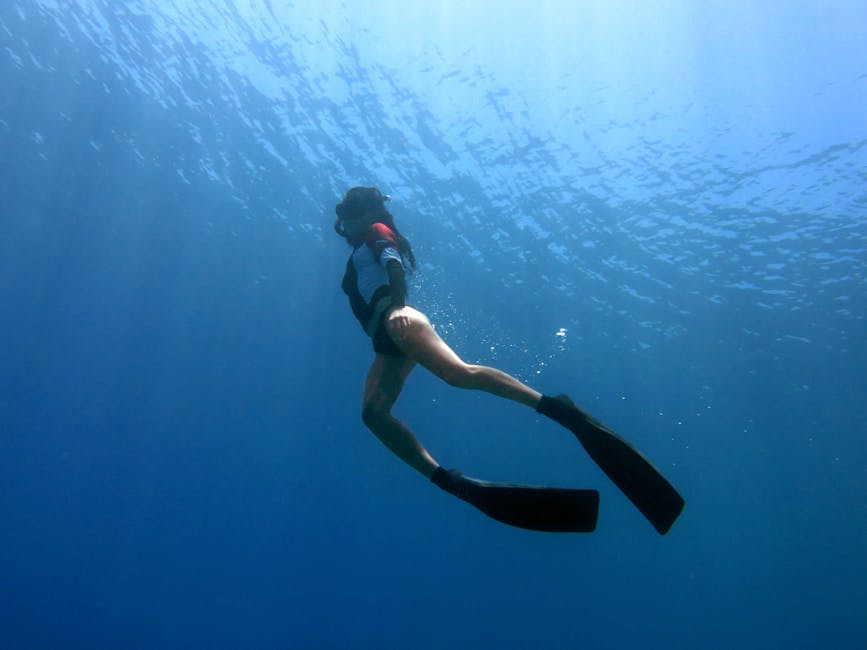
You want to hold your breath and glide underwater in silence. What stops most people isn’t lung capacity-it’s the paralyzing fear that they’ll black out mid-dive with no warning. That fear exists for a reason. According to the International Association of Freediving Instructors (AIDA), shallow water blackout accounts for the majority of freediving fatalities, yet almost no beginner article explains when it actually happens or why your brain feels perfectly fine seconds before you lose consciousness.
This gap kills people. Ocean’s Freedom doesn’t do fear-mongering, but we do tell you the truth: understanding the neurophysiology of blackout is your first survival skill, not your last.
The 40-90 Second Cognitive Failure Window: Why Beginners Black Out Feeling Fine
Static apnea blackout isn’t mysterious. It’s physics and biology working against your nervous system’s lying mouth.
Here’s what happens: when you stop breathing, your body triggers the mammalian dive reflex-blood vessels constrict, heart rate drops, and oxygen consumption plummets. This reflex peaks around 40 seconds in untrained divers (up to 90 seconds in trained individuals), according to research documented by AIDA in their Level 1 instructor manual. During this window, your conscious mind feels controlled. You’re thinking clearly. Your body isn’t screaming for air yet.
Then hypoxia-oxygen starvation in your brain-crosses a threshold your consciousness cannot register. You lose awareness before your body signals distress. You feel fine. Then you don’t feel anything.
The mechanism: as oxygen drops, your brain’s prefrontal cortex (responsible for decision-making) fails before your chemoreceptors trigger the urge to breathe. According to a 2015 study published in Respiratory Physiology & Neurobiology by researchers at the University of Tsukuba, this creates a 10-30 second window where a diver is cognitively impaired but unaware of impairment-the worst possible state.
This is why freediving alone is never acceptable. Ever. Not in a pool. Not in a bathtub. Not in your backyard at sea level. The AIDA Code of Conduct mandates a trained buddy and safety protocol for every single breath-hold session.
Real-world example: At the AIDA World Championships in 2019 (held in Croatia), a 34-year-old elite competitor completed a deep static apnea attempt with safety protocol: buddy present, rescue equipment staged, oxygen backup ready. He lost consciousness at 9:04 of breath-hold. His buddy recognized the blackout sign-loss of motor control and flushing-and initiated rescue within seconds. He survived. AIDA’s post-incident analysis emphasized that even elite athletes with perfect technique cannot predict the exact moment hypoxia becomes unconsciousness. Protocol is the only defense.

The CO2 Training Trap: Why Post-2009 Safety Standards Changed Everything
Before 2009, many freediving instructors taught “CO2 training”-deliberately extending breath-holds to build carbon dioxide tolerance, which supposedly increased CO2 threshold and made blackout less likely.
In 2009, AIDA revised its entire certification structure after multiple fatalities. The finding was devastating: CO2 training does not prevent blackout. It only delays the CO2-triggered urge to breathe, which can mask hypoxia until it’s neurologically irreversible.
According to AIDA’s safety review published in their 2010 updated protocols, the mechanism is this: CO2 and O2 deprivation trigger different neural pathways. High CO2 makes you uncomfortable-you feel like you need to breathe. Low O2 (hypoxia) makes you lose consciousness with no warning. Training yourself to tolerate CO2 is like learning to ignore a fire alarm; it doesn’t prevent the fire.
Modern certification bodies-AIDA, PADI Freediving (established 2009), and IANTD-now mandate progressive, shallow-water training with strict breath-hold time limits. PADI Freediving’s entry-level course caps static apnea at 2 minutes in controlled conditions. It’s deliberately conservative.
This is the counterintuitive truth: the fastest way to become a capable freediver is to refuse aggressive training methods. No shortcuts exist. No CO2 tolerance hack works. Your only tools are: shallow water, short breath-holds, a trained buddy, and consistent low-stress repetition over months, not weeks.
Real-world example: The AIDA Level 1 certification (entry-level) teaches static apnea in a pool with the diver in vertical position, fully supported, with a safety monitor touching them during the entire hold. Maximum depth for Level 1 freediving is 20 meters (65 feet), and maximum breath-hold duration for the course is 5 minutes in optimal conditions. This isn’t conservative; it’s evidence-based. Thousands of divers complete Level 1 annually with zero incidents because the protocol works. Leisurepro

Your Three-Month Pathway: From Zero to Certified
Month 1: Build confidence in controlled static apnea
Start with a PADI or AIDA Level 1 course. This isn’t optional. This is like learning to drive-you don’t start on the highway. You book a course with a certified instructor at a recognized facility (pools affiliated with AIDA or PADI Freediving, not independent contractors).
Your first session covers:
– Breathing techniques (proper diaphragmatic breathing, not chest breathing)
– Equalization methods (how to manage pressure as you descend)
– Safety protocols (buddy system, rescue positions, blackout recognition)
– Static apnea in controlled water (fully supported, 2-3 minute holds maximum)
The course takes 2-3 days and costs $300-$600 depending on location. The AIDA website’s instructor directory (aida-international.org) lets you search by location.
Month 2: Shallow freedive practice and dynamic apnea
Once certified, you train in controlled conditions. Most communities have freediving clubs or training groups. These meet 1-2 times weekly. You practice:
- Dynamic apnea: horizontal breath-holds underwater (pool or confined water). No depth, just horizontal distance.
- Shallow static apnea: 3-5 minutes in optimal conditions with full safety protocol.
- Equalization drills: practicing pressure management without depth.
This phase is purely skill-building. Your nervous system is learning the dive reflex. You’re not pushing limits. You’re repeating safe holds until the mechanics become automatic.
Month 3: Confined water and shallow depth
By month 3, a trained diver can safely descend to 10-15 meters (33-50 feet) in confined conditions (sheltered bays, no currents). This requires:
- An advanced certification (AIDA Level 2 or PADI Freediving Intermediate)
- Year-round practice with a club or regular buddy
- Investment in proper equipment: Leisurepro mask, snorkel, fins, wetsuit, and diving computer
A full freediving computer (like the Shearwater Peregrine or Apple Watch for shallow dives) tracks your depth and bottom time. It’s non-negotiable for depth diving.
Equipment That Actually Matters (And What to Skip)
Many freediving shops sell $2,000 “complete packages” that are marketing, not necessity.
What you need:
– Diving mask (low-volume, $50-$150)
– Freediving fins ($150-$300)
– Snorkel ($30-$50)
– Wetsuit matched to your climate ($150-$400)
– Diving watch or computer for shallow dives ($200+) Leisurepro
What you don’t:
– Spearguns, GoPros, underwater sleds, or “advanced” gear before month 6 of training
– Weighted belts or heavy vests-these are for advanced depth diving only
– Expensive rental gear when entry-level equipment works perfectly
Real divers wear basic, reliable gear. The AIDA World Championships showcase athletes in $300 masks and $200 fins, not luxury equipment. Simplicity reduces failure points.
FAQ: Questions Beginners Actually Ask
Q: Can I learn freediving from YouTube videos?
No. AIDA and PADI data show that untrained divers attempting breath-hold exercises without supervision have a significantly higher incident rate. You cannot practice static apnea alone. You cannot practice depth dives without a trained buddy. Instructional videos can supplement formal training, but they cannot replace it. Budget for a Level 1 course ($300-$600) as non-negotiable.
Q: What’s the difference between freediving and static apnea?
Static apnea is breath-holding in one place (horizontal or vertical position in water). Freediving is the broader activity-it includes static apnea, dynamic apnea (horizontal breath-holds), and depth diving. Most training starts with static apnea because it’s controllable and safe in a pool.
Q: How long before I can dive to 30 meters?
Realistically: 6-12 months of consistent training (2-4 sessions weekly). A 30-meter (100-foot) dive requires AIDA Level 3 or equivalent, which typically demands 3-6 months minimum from Level 1 certification. Some divers take years to safely reach that depth. Speed is a death sentence in freediving.
Q: Is freediving dangerous?
Yes. It’s inherently riskier than snorkeling or scuba diving because there’s no air supply. The risk is manageable with training, protocol, and respect for limits. According to AIDA’s incident reporting, the vast majority of fatalities involve either untrained divers, divers ignoring protocol, or divers pushing beyond their current capacity. None of these are inevitable.
Q: How much does it cost to get certified?
- AIDA/PADI Level 1: $300-$600
- Equipment (mask, fins, snorkel, wetsuit, watch): $400-$1,000
- Monthly club membership or training group: $50-$150
- Advanced certifications (Level 2+): $400-$800 each
First-year total: $1,200-$2,500 for serious recreational freediving. This is less than scuba certification but more than snorkeling. Booking.com Partner Consider adding dive-specific insurance ($100-$200 annually).
The Non-Negotiable Rule: Why Your Buddy Saves Your Life
Shallow water blackout is silent. A blacking-out diver doesn’t thrash or call for help. They lose consciousness in 5-10 seconds and stop moving. A trained buddy recognizes this within 15 seconds if they’re watching properly.
The buddy system isn’t optional. It’s the only thing between you and death. BookRetreats.com Some freediving apps (like Freediving Log) help track your metrics and safety check-ins with your buddy.
Your buddy must:
– Stay within arm’s reach during your hold
– Watch for flushing, loss of motor control, or sudden stillness
– Know rescue breathing (CPR-plus-oxygen)
– Never be attempting their own breath-hold while you’re underwater
This is why freediving clubs matter. They pair you with trained safety buddies who understand protocol and take their role seriously.
Disclaimer: Freediving carries inherent risk of serious injury or death. This article provides educational information, not medical or safety advice. Before attempting any breath-hold activity, complete a certified AIDA or PADI Level 1 course with a qualified instructor. Do not practice alone. Consult a physician before starting if you have respiratory, cardiac, or neurological conditions. Always follow local regulations and your instructor’s protocols.
🌊 Join 10,000+ Ocean Lovers
Get our free Ocean Freedom Starter Guide + weekly guides on surfing, diving & nomad life.
No spam. Unsubscribe anytime.
🌊 Recommended Gear & Experiences
Some links are affiliate links — we earn a small commission at no extra cost to you.
As an Amazon Associate we earn from qualifying purchases.
We may earn a commission on bookings — at no extra cost to you.
🤿 DOWNLOADABLE GUIDE
Freediving Training Log — 60 Sessions
$7.99 — instant PDF download
Free for Ocean Lovers
Get the Ocean Freedom Starter Guide
Gear guides, destination picks, and honest advice for surfers, divers, and sailors. Free.
Join 500+ ocean lovers in our free community
Surf reports, dive trip planning, nomad tips — live in WhatsApp.