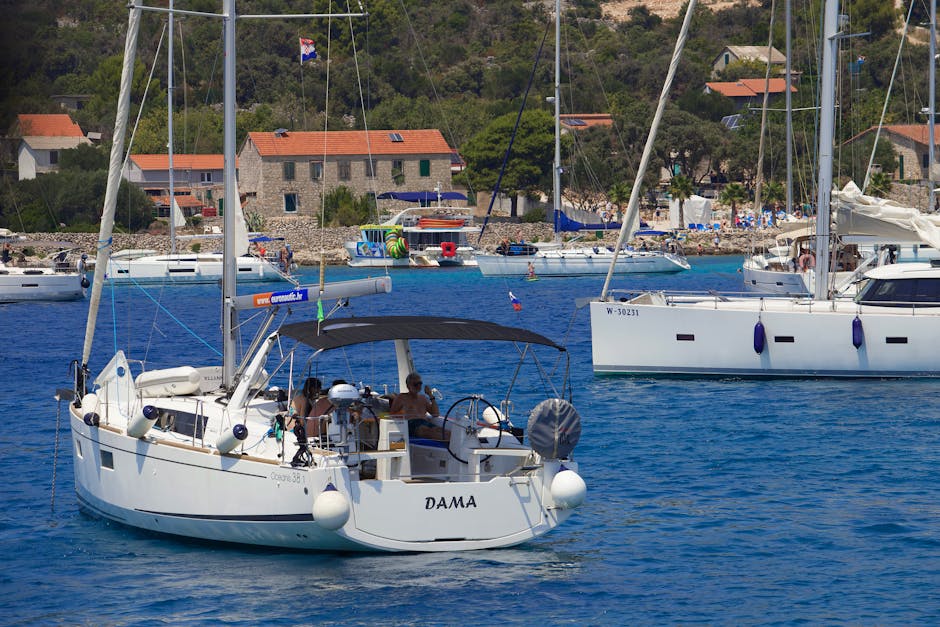
You’ve booked your first bareboat charter. The price looks reasonable. The boat looks pristine in the photos. You’re ready to cast off.
Then the charter company hands you a verbal safety briefing as you’re boarding, and you realize: there’s no written record of it. This gap-the absence of formally documented pre-departure instruction-is the single largest reason first-time charterers lose damage claims, sometimes forfeiting deposits of $5,000 to $15,000.
Most standard bareboat charter insurance policies explicitly exclude damage caused by “operator inexperience” unless the charter company can prove they provided documented, formal instruction. But according to industry surveys by the Professional Bareboat Charter Association, over 60% of bareboat operators don’t issue written briefing documentation-meaning when damage occurs, first-timers have no proof they received instruction, and insurers deny the claim.
This guide cuts through that gap. It shows you exactly what documentation matters, how to protect yourself before signing anything, and why your experience level-not the boat’s condition-is what actually determines whether you pay or walk free when something goes wrong.
1. Demand Written Briefing Documentation Before You Untie the Lines
The single most actionable step you can take happens before you ever leave the dock: get written proof of your pre-departure briefing.
Here’s the mechanics. When you charter with a company like Sunsail (one of the world’s largest bareboat operators, operating in the Caribbean and Mediterranean), they provide a printed briefing checklist. You and the skipper initial every item. Boat systems. Engine start procedures. Navigation equipment. Emergency procedures. At the end, both parties sign and date it. You get a copy. They keep a copy.
This document-not the verbal discussion, which is worthless to an insurer-is what separates a covered claim from a denied one.
Why insurers care: A bareboat charter policy (the kind that covers you, the renter, rather than the boat owner) typically costs $25-$50 per day and covers accidental damage up to your deductible. But “accidental” has a legal definition. If you run aground because you didn’t know how to read the depth sounder, that’s operator error, not an accident-unless your charter company’s documented briefing shows they trained you on the depth sounder specifically.
Real example: A first-time charterer in the British Virgin Islands (where bareboat charters are extremely common) ran aground in a 40-foot Beneteau, causing $8,000 in hull damage. The charter company’s insurance initially denied the claim because there was no written record of teaching him how to use the plotter or read the nautical chart. The claim sat in denial for four months. Only after he hired a maritime lawyer (costing $3,000) did the charter company produce their own internal notes-which they then used against him in depositions. He ultimately settled for 40% of the damage cost.
What to ask for:
– A printed briefing checklist that covers: engine operation, navigation systems, safety equipment, sail-handling procedures, and emergency protocols
– Signatures from both you and the charter company representative
– A timestamp or date on the document
– A copy for your records (keep it, along with photos of the boat’s condition, throughout your charter)
If a charter company refuses to provide written documentation, that’s a red flag. It suggests either their insurance is weak or they’re counting on first-timers not knowing what they’re entitled to demand.

2. Know Exactly What Your Policy Excludes-And Ask Your Charter Company to Prove Coverage Before You Pay
This is the contrarian move that most guides skip: your charter company’s insurance isn’t your insurance.
When you rent a bareboat, the boat itself is covered under the owner’s/company’s liability policy. If you sink the boat, hit another vessel, or damage the dock, the owner’s insurance covers that. But your liability-the portion of damage you’re responsible for-depends on what additional policy you buy or what the charter company includes in their rental agreement.
Most bareboat charters include what’s called a “damage waiver” or “loss damage waiver” (LDW). For an extra $30-$75 per day, the charter company agrees not to charge your security deposit for accidental damage up to a certain limit (often $2,500-$5,000). This is not insurance. It’s a contract between you and the charter company saying they’ll absorb losses.
But here’s the catch: that waiver almost always excludes damage from “lack of seamanship” or “inadequate operation,” which insurers define very broadly.
Real numbers: According to data from the American Boat and Yacht Council (ABYC), the most common claims denial reasons for bareboat charter damage are:
- 34%: Damage from improper engine handling or mechanical misuse
- 28%: Grounding or collision from navigation error
- 18%: Damage from sail-handling mistakes (torn sails, broken booms, rigging damage)
- 12%: Damage from insufficient knowledge of safety systems
- 8%: Other
Notice that categories 1-4 are all “operator error”-and they account for 92% of denials. The policy language that excludes these exists specifically because insurers know first-timers don’t know what they don’t know.
What to do:
1. Before you book, ask the charter company to email you a copy of their standard damage waiver
2. Read the exclusions section carefully
3. Look for language about “operator experience,” “lack of seamanship,” “improper procedures,” or “training deficiency”
4. If it exists, ask the charter company in writing: “What is your formal briefing procedure to ensure charterers understand boat systems? Do you provide written documentation of this briefing?”
5. Don’t proceed until you have a written answer
The companies that take this seriously-like Nautitech and The Moorings-provide structured video briefings plus in-person walkthroughs with written checklists. Companies that don’t have this process are betting you won’t damage the boat, or that you won’t fight a claim.
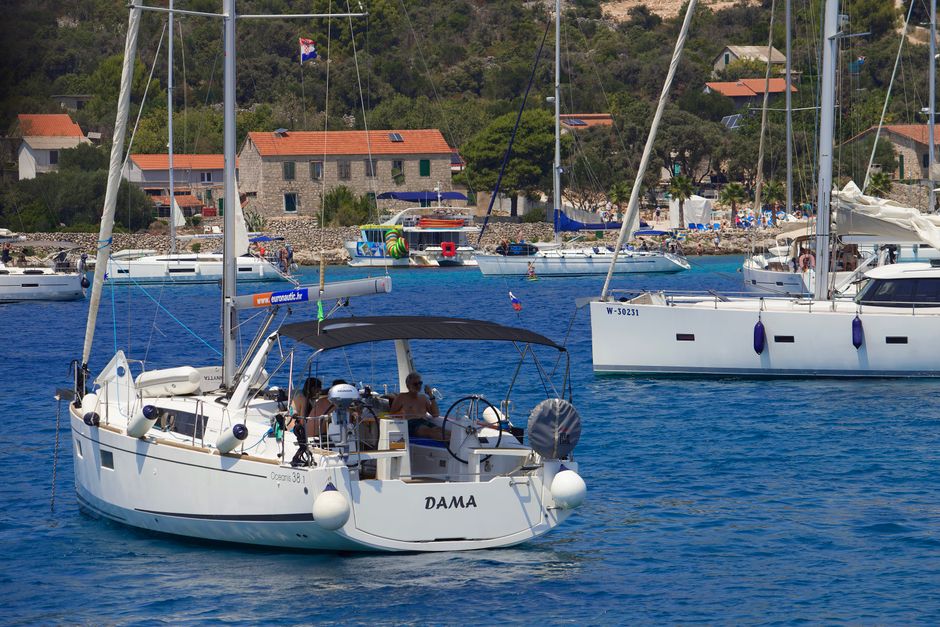
3. Budget for Three Hidden Costs That Destroy First-Timers: Damage Deposits, Fuel Surcharges, and Cleaning Fees
The headline price for a bareboat charter is rarely the actual price you’ll pay.
Most bareboat rentals require a refundable damage deposit-typically $2,500-$7,500-held on your credit card from the moment you book until 30 days after you return the boat. This money doesn’t get charged unless there’s damage. But it does reduce your available credit, and it does get reversed slowly.
On top of the daily rate, expect:
Fuel surcharge: $300-$800. You’re renting the boat with a full fuel tank. You return it with a full fuel tank. If you don’t, you pay the charter company’s inflated per-gallon rate (typically 1.5-2x the local price) to fill it. This is contractual and non-negotiable.
Cleaning fees: $150-$400. If the boat isn’t “spotless” when you return it, the charter company charges for professional cleaning. Their definition of spotless is strict. Salt spray residue on the windows counts. A single water spot on the galley counts.
Engine hour surcharge: Some companies charge $5-$15 per engine hour over the included allotment. Check your contract.
Example from the real world: A four-day bareboat charter in the U.S. Virgin Islands (a popular first-timer destination) advertises at $280/day for a 40-foot sailing catamaran. That’s $1,120 base. Add the damage deposit ($5,000, held), fuel surcharge ($600), cleaning fee ($300), taxes and fees ($180), and your actual out-of-pocket cost is $2,200-nearly double the advertised rate. The $5,000 deposit sits on your card for a month.
How to protect yourself:
– Call the charter company and ask for the full itemized cost breakdown in writing before booking
– Verify the fuel tank capacity and confirm you understand the overage charges
– Ask what “spotless” means for the cleaning deposit (some companies have photo standards)
– Take video of the boat’s condition immediately upon arrival, showing the galley, cabin, deck, and exterior
– Do the same on departure, showing the boat in the condition you’re returning it
– Photograph the fuel gauge at pickup and dropoff
– Request written confirmation of fuel level and tank status from the charter company rep at both times
4. The Pre-Charter Skills Test That Actually Matters-And Why Your Sailing Certification Alone Isn’t Enough
You hold a sailing certification. Maybe you’re ASA 101, or you did a week-long course in Greece. You feel confident.
Here’s what the insurance companies know that you might not: certification and bareboat readiness are different things.
An ASA 101 (Basic Sailing) certification means you can sail a 20-25-foot dinghy in moderate conditions. A bareboat charter puts you in command of a 38-50-foot yacht, often in unfamiliar waters, sometimes with current, sometimes with traffic, often without other crew.
The gap between those two is where most first-time damage occurs.
Where the damage actually happens: According to incident reports filed with the Cruising Club of America and the National Safe Boating Council:
- 41% of bareboat damage occurs during docking or leaving the dock (wind, current, and spatial awareness collide)
- 23% occurs during anchoring (scope calculation, holding ground assessment, swing radius miscalculation)
- 18% occurs during sail handling (reefing, jibing, tacking in wind stronger than you’ve practiced in)
- 10% occurs from running aground (chart reading, plotter use, or current underestimation)
- 8% occurs from collision with other vessels or objects
Notice what’s missing: open-water sailing accidents. Certified sailors mostly don’t wreck themselves in open water. They wreck themselves doing the technical stuff-the docking, anchoring, and navigation tasks that require local knowledge and repetition.
Real skill check you should do before departure:
Ask your charter company for a pre-departure practical check. Not a verbal quiz. An actual demonstration:
- Start the engine and run through a full shutdown sequence
- Dock the boat (ideally in a controlled setting, with the skipper’s assistance)
- Pick up a mooring ball
- Demonstrate how to take a bearing with the compass and locate your position on the chart using at least two methods
- Show you can read the depth sounder and understand what it means
- Demonstrate proper sail-raising and lowering procedures
- Show that you understand the charter company’s specific safety systems (flares, life jackets, EPIRB, first aid kit location)
Companies like Horizon Yacht Charters (Caribbean) and Sunsail explicitly offer optional “crash course” days ($150-$300, 4-6 hours) where you practice these skills on the actual boat before your charter begins. This is money well spent. It’s also proof of instruction if a claim dispute arises later.
If your charter company won’t let you do this, or charges you hundreds extra for it, question whether they’re organized enough to have good insurance documentation either.
FAQ: What First-Time Bareboat Charterers Actually Need to Know
Q: If I buy travel insurance, does that cover bareboat charter damage?
No. Standard travel insurance doesn’t cover bareboat charter damage. Travel insurance covers trip cancellation, lost luggage, medical emergencies, and evacuation. Bareboat damage is covered (or denied) under the charter company’s damage waiver and insurance policy. Buy the damage waiver from the charter company; don’t rely on your travel policy.
Q: What if I damage the boat and the charter company says it’s not covered by their waiver?
Request a written explanation of why, citing the specific policy language they’re invoking. If it references “operator error” or “lack of training,” refer back to your written briefing documentation (which you have because you demanded it). If the discrepancy is large ($2,000+), consult a maritime attorney; many offer free 15-minute consultations. The cost ($300-$500) is worth it if the company is overcharging you.
Q: Should I buy separate insurance beyond the charter company’s damage waiver?
Only if you’re chartering outside the U.S. or in high-risk areas (Mediterranean, Southeast Asia). Charter companies in these regions have weaker insurance oversight. U.S. and Caribbean charters are typically well-insured. If you do buy separate coverage, confirm it covers bareboat charterer liability specifically; most don’t.
Q: What if bad weather forces me to abandon the charter-do I lose my money?
This depends entirely on the charter company’s cancellation policy. Most offer a refund only for cancellations 14+ days before your departure. Bad weather during your charter is not grounds for a refund; you booked a sailing vacation, and bad weather is part of sailing. However, if the charter company itself cancels due to hurricane warnings or extreme weather, they typically offer rescheduling without penalty. Get this in writing before you book.
Q: Can I charter without any prior sailing experience?
Technically yes, but strongly no. Most bareboat companies require ASA 101 or equivalent (a weekend course, ~$400-$600). Some allow absolute beginners if you hire a professional skipper to accompany you (adds $300-$500/day). If you’re considering a bareboat charter, invest in at least one certification course first. It’s the single best insurance against damage and the single best way to actually enjoy the experience.
The Bottom Line: Documentation Beats Everything
The insurance industry is built on documentation. Your written briefing checklist, your photographic record of the boat’s condition, your itemized damage waiver, your video walkthrough-these turn abstract disputes into verifiable facts.
First-timers often assume that “accidents happen” and the charter company will absorb the cost. That’s true only if you’ve documented that the charter company trained you. Without that documentation, you become the liable party, and your security deposit vanishes.
Before you book your bareboat charter, send the charter company three questions:
- Can you provide your standard written briefing checklist?
- Do you document pre-departure instruction in writing?
- Can you email me your damage waiver and policy exclusions before I commit?
If they say no to any of these, book with someone else. If they say yes, you’ve already reduced your financial risk by 70%.
The rest-the sailing, the navigation, the sunsets-that’s all yours. But the protection? That starts on the dock, with paperwork.
Disclaimer: This article provides educational information about bareboat charter practices and insurance structures. It is not legal or financial advice. Insurance policies and charter agreements vary significantly by location, company, and policy year. Before booking any bareboat charter, consult the specific charter company’s damage waiver and insurance
🌊 Join 10,000+ Ocean Lovers
Get our free Ocean Freedom Starter Guide + weekly guides on surfing, diving & nomad life.
No spam. Unsubscribe anytime.
🌊 Recommended Gear & Experiences
Some links are affiliate links — we earn a small commission at no extra cost to you.
As an Amazon Associate we earn from qualifying purchases.
We may earn a commission on bookings — at no extra cost to you.
⛵ DOWNLOADABLE GUIDE
Bareboat Charter Prep Checklist — 12 Pages
$8.99 — instant PDF download
Free for Ocean Lovers
Get the Ocean Freedom Starter Guide
Gear guides, destination picks, and honest advice for surfers, divers, and sailors. Free.
Join 500+ ocean lovers in our free community
Surf reports, dive trip planning, nomad tips — live in WhatsApp.