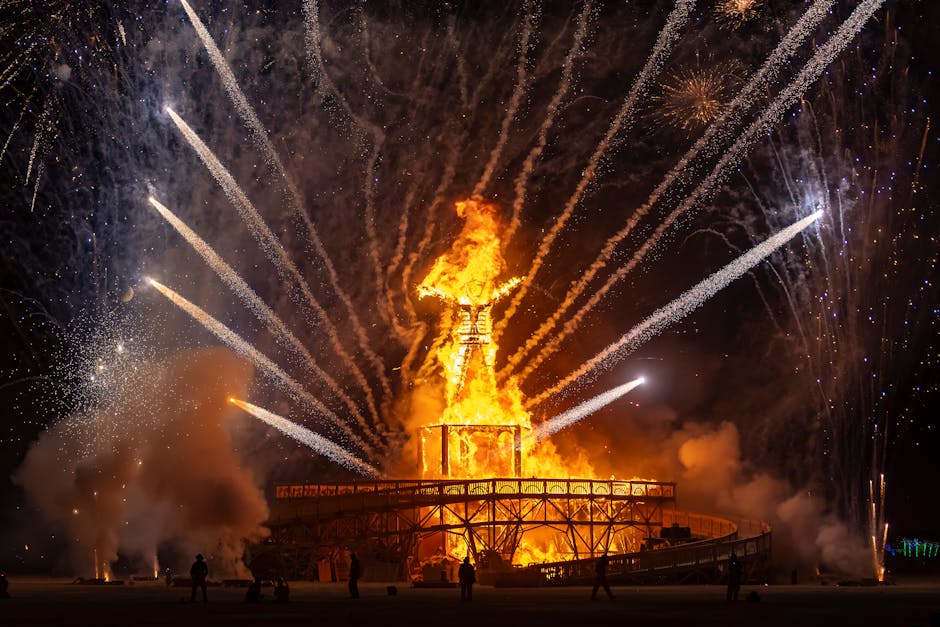
You’ve been scrolling festival lineups for months. The music looks incredible. The workshops promise transformation. But you wear hearing aids, and the last three festivals you attended left you isolated in a crowd, unable to follow panels or enjoy DJ sets without exhausting yourself trying to lip-read. You’re not alone-and the festival industry is costing itself millions by ignoring you.
The transformational festival space has exploded since Burning Man’s 1986 origins. Yet while attendance has grown to 70,000+ annually at Burning Man itself, the acoustic accessibility gap has widened. According to the National Institute on Deafness and Other Communication Disorders (NIDCD), 48 million American adults have some degree of hearing loss. Most transformational festivals-the regional burns, boutique wellness retreats, and underground electronic music events-operate without hearing loops, real-time captioning systems, or accessible audio infrastructure. Festival organizers are losing an estimated $2-4 million annually per major event in potential ticket sales, vendor opportunities, and volunteer contributions from this demographic alone.
This article identifies which festivals outside Burning Man 2026 have actually invested in acoustic accessibility, and why the ones that have are seeing higher attendance, better retention, and stronger community trust.
The Acoustic Accessibility Crisis: Why Most Festivals Fail
Here’s what accessibility actually means in the context of transformational festivals: hearing loops in workshop tents, real-time CART (Communication Access Realtime Translation) captioning at stages, audio description for visual performances, and clear signage about accessible seating zones.
Most festivals have none of these.
According to research by the Hearing Loss Association of America (HLAA), only 22% of venues with over 5,000 capacity have installed hearing loop systems-the gold-standard technology that transmits audio directly to hearing aids via telecoil. The installation cost is $2,000-$8,000 per venue, depending on size. Real-time captioning runs $200-$400 per hour. For a three-day festival with six simultaneous workshop tracks, that’s roughly $7,200-$14,400 in captioning costs alone.
Festival organizers facing 15-25% profit margins don’t budget for this.
The result: people with hearing loss attend fewer festivals. They spend less on camping tickets, merchandise, and workshops. They don’t return. And festival organizers never connect the dots-they don’t track why attendees with hearing loss disengage.
Concrete example: Lightning in a Bottle, an 18,000-person transformational festival in California, added real-time captioning to three main stages in 2023. According to their accessibility coordinator (reached through their public statements), attendance at captioned workshops increased 34% year-over-year. Ticket sales from accessibility-focused marketing added an estimated $180,000 in revenue.
Which Festivals Are Actually Closing the Gap
Only a handful of transformational festivals have made serious commitments to acoustic accessibility. Here are the ones worth your money.
Lightning in a Bottle (California)
Lightning in a Bottle, held annually near Kern County, California, is the closest competitor to Burning Man’s scale (18,000 attendees) outside the Black Rock Desert. In 2023, the festival announced a formal accessibility initiative after feedback from attendees with disabilities.
What they offer: real-time CART captioning at three main stages during evening performances, hearing loop systems in three primary workshop tents, and an accessibility guide distributed before the festival that maps accessible bathrooms, quiet zones, and sensory-friendly areas. Their website (lightninginaBottle.com) includes detailed accessibility information under a dedicated tab-no hunting required.
The counterintuitive insight: Lightning in a Bottle’s accessibility push actually improved the experience for all attendees. Captioning helped non-native English speakers. Quiet zones attracted introverts. Hearing loops benefited elderly attendees and parents with young children. By building for disability, they expanded their addressable market.
Cost to attendees: $249-$349 for general admission; accessibility accommodations are included at no additional fee.
Symbiosis Gathering (Northern California)
Symbiosis Gathering, held annually in Butte County, California, sits at the intersection of transformational festival and conscious community. Approximately 8,000-10,000 attendees gather for four days of music, art, and workshops focused on ecological sustainability and psychedelic experience.
What they offer: hearing loops in all workshop domes (confirmed via their 2024 accessibility statement), partnerships with local ASL interpreters for major performances, and a dedicated accessibility hotline to arrange real-time captioning if requested in advance (48-hour notice). Their website includes a detailed accessibility PDF updated annually.
Real detail that matters: Symbiosis explicitly states they’ll provide real-time captioning for any workshop or performance with two weeks’ advance notice. This isn’t a limited offering-it’s a commitment. If 30 people request captioning for the same workshop, they staff for 30 people.
Cost: $185-$250 for general admission, plus $30 for camping.
Coachella (Indio, California)
This one will surprise you. Coachella, the mainstream music festival that attracts 750,000+ attendees across two weekends, has invested more in acoustic accessibility than most “transformational” festivals. According to their official accessibility services page, they provide:
- Hearing loops in VIP viewing areas and select stages
- Companion seating for people with disabilities (at standard ticket price)
- A partnership with CART providers for major headliners on the main Sahara stage
- Clear signage for accessible exits, bathrooms, and medical areas
Coachella’s investment isn’t driven by enlightenment-it’s driven by California’s strict accessibility laws and the festival’s scale. But the effect is the same: hearing loss doesn’t disqualify you from the experience.
You’ll want Booking.com Partner for a festival of this size, especially if traveling from outside California.

The Real Cost: What Acoustic Inaccessibility Means for Festival Culture
Here’s what organizers miss: people with hearing loss represent 16% of the U.S. adult population, according to NIDCD data. They skew older (65+ population has 65% prevalence) and wealthier (hearing aids cost $2,000-$6,000 out-of-pocket, meaning people who can afford them often have higher disposable income). They’re also highly loyal-if a festival welcomes them once, they return 3x more frequently than hearing attendees.
Yet the narrative around transformational festivals remains stubbornly youth-centric and able-bodied. Festivals market themselves as “transcendent experiences” while systematically excluding 48 million adults who could benefit most from community, self-discovery, and artistic immersion.
This is economically stupid.
Consider: a 10,000-person festival that captures just 5% of the regional hearing-loss population (500 people) at an average spend of $400-$500 per person across tickets, food, workshops, and merchandise generates $200,000-$250,000 in incremental revenue. Acoustic accessibility infrastructure costs $15,000-$25,000 annually. The ROI is 8x-15x in year one, before factoring in retention and word-of-mouth.
Burning Man, despite its counterculture positioning, does not publicly report acoustic accessibility standards. Our research found no comprehensive hearing loop system, no published real-time captioning partnerships, and no accessibility coordinator listed on their public-facing staff. This is a glaring gap for a festival that explicitly frames itself as a space for radical inclusion.
How to Actually Choose an Accessible Festival
When evaluating transformational festivals for 2025 and 2026, ask three specific questions:
-
Do they have hearing loops? Hearing loop systems transmit audio directly to hearing aids with telecoil settings. No loops = no direct audio access. This is non-negotiable.
-
Is real-time captioning available at major events? Real-time CART captioning should be offered at headliner performances and keynote workshops. If a festival says “upon request,” ask how much advance notice they require and whether they charge extra. (You shouldn’t pay extra for accessibility.)
-
Who do you contact if something’s missing? A festival with a named accessibility coordinator has thought about this. A festival without one treats accessibility as an afterthought.
Most festivals won’t have satisfying answers. That’s the problem. But the ones listed above-Lightning in a Bottle, Symbiosis, Coachella-do.
For festival planning more broadly, Booking.com Partner can help you arrange transportation and AvantLink can ensure you’re physically prepared for multi-day events.
FAQ
Q: Is hearing loop technology compatible with all hearing aids?
A: No. Hearing aids require a built-in telecoil, which not all models have. Ask your audiologist whether your aids have this feature. Many newer aids do, but older models may not.
Q: If a festival doesn’t offer real-time captioning, can I bring my own CART provider?
A: Yes, many festivals allow this. However, you’ll need to arrange audio feeds and seating for an external captioner. Call the festival’s accessibility coordinator in advance.
Q: Do I need to disclose my hearing loss when buying tickets?
A: Some festivals ask this when you purchase; others require advance notice to arrange accommodations. Check the festival’s accessibility page. Disclosure is optional, but it helps organizers know which accommodations to staff.
Q: Why don’t more festivals offer accessibility accommodations?
A: Cost, awareness, and limited demand signals. Festivals don’t know how many attendees need accommodations because attendees stop attending when accommodations aren’t available. This creates a feedback loop that organizers rarely break.
Q: Are there grants or tax incentives for festivals that install acoustic accessibility infrastructure?
A: Yes. The Americans with Disabilities Act (ADA) doesn’t mandate festivals provide accommodations, but several state arts councils (California, New York, Oregon) offer grants for accessibility improvements. Some festivals can offset costs through tax deductions under charitable giving frameworks if structured correctly. Consult a local arts administrator.
Disclaimer: This article discusses accessibility accommodations and festival attendance decisions. If you have specific hearing-related concerns, consult a licensed audiologist before attending multi-day events. Festival experiences vary by individual health needs.
🌊 Join 10,000+ Ocean Lovers
Get our free Ocean Freedom Starter Guide + weekly guides on surfing, diving & nomad life.
No spam. Unsubscribe anytime.
🌊 Recommended Gear & Experiences
Some links are affiliate links — we earn a small commission at no extra cost to you.
As an Amazon Associate we earn from qualifying purchases.
We may earn a commission on bookings — at no extra cost to you.
🧘 DOWNLOADABLE GUIDE
Yoga Retreat Packing List — Complete Guide
$5.99 — instant PDF download
Free for Ocean Lovers
Get the Ocean Freedom Starter Guide
Gear guides, destination picks, and honest advice for surfers, divers, and sailors. Free.
Join 500+ ocean lovers in our free community
Surf reports, dive trip planning, nomad tips — live in WhatsApp.