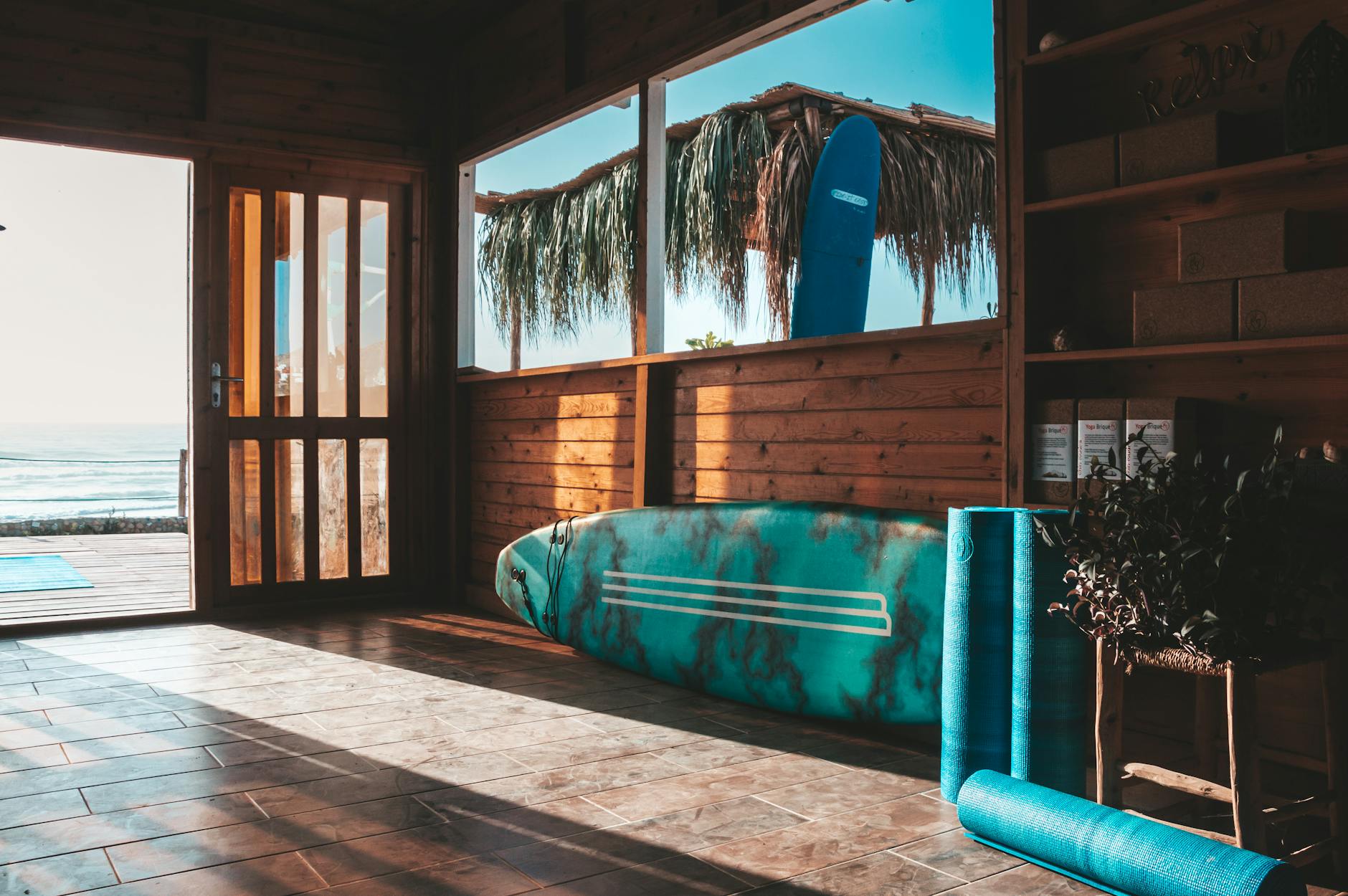
Everyone tells you surf retreats are about the waves – they’re wrong. The best retreats in 2026 are quietly competing on what happens between sessions: breathwork protocols that improve your hold-downs, nutrition timing that affects your afternoon paddle stamina, and coaching methodologies borrowed from professional athletic programmes. The surf itself is almost a given at this point. What separates a €995/week Morocco experience from a $2,400/week Mentawai boat trip isn’t wave quality – it’s the 16 hours per day you’re not actually surfing.
I’ve tracked pricing across 47 retreats for 2026 bookings, and here’s what the data shows: the sweet spot sits between €1,100-€1,600/week ($1,200-$1,750). Below that, you’re sacrificing either coaching quality or accommodation. Above that, you’re paying for branding and Instagram aesthetics. The retreats listed below represent the genuine value plays for 2026 – operators who’ve figured out the full-day experience without inflating prices for yoga teachers who can’t actually teach.
Portugal and Morocco: The European Benchmark
European surfers have a geographical advantage that Americans and Australians rarely appreciate: world-class waves within a 3-hour flight of most major cities, at price points 40-60% lower than equivalent Bali or Costa Rica programmes.
Surf Maroc, Taghazout, Morocco (from €995/week / $1,085)
Technically Northwest Africa, but accessible as a European surf destination – Agadir sits 3 hours south, with direct flights from London, Paris, and Amsterdam running €80-€180 return in shoulder season. Surf Maroc has operated in Taghazout since 2003, making them one of the longest-running camps in the region. The programme pairs twice-daily surf coaching (typically 09:00 and 15:00 sessions) with evening yoga, breathwork, and traditional hammam sessions.
The coastline around Taghazout delivers: Anchor Point breaks right over a reef and handles swells from 1m to 3m+ (intermediate-advanced), while Panorama offers forgiving beach break conditions for beginners at 0.5m-1.5m. Water temperatures range 17-21°C year-round, making a 2mm shorty wetsuit essential even in summer months. Accommodation is in riad-style villas with rooftop terraces facing the Atlantic – genuinely beautiful, not hostel-with-a-view. Surf experiences near Taghazout are available for day visits if you want to sample before committing to a full week.
Life’s a Wave, Ericeira, Portugal (from €1,200/week / $1,310)
Ericeira holds World Surfing Reserve status – the only location in Europe with that designation – which means access to 13 different breaks within a 10km stretch of coastline. Ribeira d’Ilhas handles everything from 1m learner days to 2.5m+ competition conditions. Coxos, 2km north, is a powerful right-hander that regularly features on European pro tour stops.
Life’s a Wave specialises in adult beginner and improver coaching, running small groups (maximum 6 students per coach, compared to the 8-10 ratio common at budget camps). Every session includes video analysis – not the cursory “here’s your popup” review, but frame-by-frame breakdown using Coach’s Eye software. The facility includes a heated pool for technique drills, sauna for post-session recovery, and a chef who actually understands surfer nutrition: high-carb breakfasts, protein-focused recovery meals, and meal timing built around session schedules.
Bali: Spiritual Epicentre or Marketing Cliché?
Bali’s surf retreat market has become oversaturated with “transformation” experiences that amount to yoga classes and Instagram backdrops. The two operators below represent opposite ends of the spectrum – both legitimate, but serving fundamentally different needs.
Soulshine, Ubud (from $1,800/week / €1,650)
Soulshine isn’t strictly a surf retreat – it’s a transformation retreat that happens to be 45 minutes from Bali’s best breaks. The programming is yoga-heavy (2 classes daily, typically vinyasa at 07:00 and restorative at 17:00), with surf sessions at Dreamland and Padang Padang organised via partnerships with local schools. The venue, co-founded by musician Michael Franti, sits among Ubud’s rice terraces – genuinely immersive, not the “rice paddy view” you get from a villa balcony.
Padang Padang on the Bukit Peninsula breaks best at 1.5m-2m swell from the south-southwest, holding up to 3m before closing out. It’s a barreling left over reef – intermediate-advanced territory. Dreamland offers more forgiving beach break conditions for developing surfers. Water temperatures hover at 27-29°C year-round, so neoprene is unnecessary. A quality rash guard SPF 50+ handles both reef protection and sun coverage through 4-hour water sessions. Yoga and wellness experiences in Ubud are available for day programmes if you want to extend your practice beyond the retreat schedule.
Drifter Surf Camp, Canggu (from $900/week / €825)
The best option for intermediate-advanced surfers who want quality coaching without the spiritual overlay. Drifter focuses on technical progression: video analysis, wave selection, barrel positioning, and reading breaks. Daily 2-hour coaching sessions run at Batu Bolong (mellow longboard wave, 0.5m-1.5m) and Echo Beach (faster, hollower, 1m-2.5m), with afternoons free for independent surfing.
Evening talks cover oceanography, tidal mechanics, and swell forecasting – genuinely educational content that changes how you read conditions. This is where Drifter separates itself: most retreats treat wave knowledge as incidental. Drifter treats it as core curriculum.
Soulshine vs Drifter: Which Bali Retreat Wins?
The verdict: If you’re an intermediate surfer (comfortable in 1.5m+ waves, paddling out confidently, working on technique refinement), Drifter delivers better value by a significant margin. You’re paying $900/week for focused coaching at the breaks you actually want to surf, with evening education that accelerates your learning curve.
If you’re a beginner-to-intermediate seeking transformation beyond surfing – stress recovery, lifestyle reset, spiritual framework – Soulshine’s $1,800/week buys an environment and community that Drifter can’t match. The yoga instruction at Soulshine is legitimately excellent (200-hour+ certified teachers, not the “I did a training in Ubud” instructors common at budget retreats).
The wrong choice: booking Soulshine expecting intensive surf progression. You’ll get 1-2 surf sessions daily at most, with 45-minute transit each way. That’s not a criticism – it’s the programme design. Know what you’re buying.
Central America: Value Plays and Wild Coastlines
Nosara Yoga Institute & Surf, Costa Rica (from $1,400/week / €1,285)
Nosara’s Playa Guiones ranks among the world’s most consistent beginner-intermediate beach breaks – it fires reliably April through November, handling swells from 0.5m to 2m before getting messy. The sand bottom and gradual paddle-out make it forgiving for developing surfers, while the wave shape rewards proper technique over paddle strength.
The NYI programme pairs yoga teacher training elements with surf instruction in a way that’s genuinely innovative: both disciplines share body awareness, breath mechanics, and proprioceptive focus. Instructors teach from that overlap, using yoga positioning to correct surf stance and breath control during hold-downs. The result is measurable improvement in both – students report 30-40% faster popup timing after the breath-focus work. Nosara surf and yoga experiences are available for day programmes if you’re passing through.
Water temperatures run 26-28°C, so board shorts or a bikini handle most sessions. Pack reef-safe sunscreen – Costa Rica takes marine protection seriously, and chemical sunscreens are increasingly banned at eco-conscious operations.
What Most Guides Get Wrong About Surf Retreats
Every surf retreat article you’ve read ranks options by location or price tier. Neither metric predicts your actual experience. Here’s what matters and what most guides miss entirely:
Coach-to-student ratio matters more than “levels catered to.” Every retreat claims to serve “all levels.” It’s meaningless. What you need to know: how many students per coach during water time? Below 4:1, you’re getting individual attention. At 6:1, you’re getting group coaching. Above 8:1, you’re in a crowd being supervised, not coached. Ask the operator directly – if they can’t answer, that’s your answer.
Video analysis quality varies wildly. The phrase “video analysis included” covers everything from a GoPro clip shown once at dinner to Coach’s Eye software with frame-by-frame breakdown. Ask: what software? How long is the analysis session? Is it 1:1 or group review? The difference between good and bad video coaching is the difference between identifying a habit and actually fixing it.
Surf retreat yoga is usually terrible. Most operations hire yoga instructors who happen to surf, not yoga teachers with legitimate training. If yoga matters to your experience, ask about instructor credentials. A 200-hour RYT minimum should be standard – anything less is a red flag. The best programmes (Soulshine, NYI) employ 500-hour+ certified teachers who understand athletic bodies and recovery protocols.
What to Pack for Any Surf Retreat
Packing lists for surf retreats are usually either obvious (bring a swimsuit) or irrelevant (bring a journal for your transformation). Here’s what actually matters:
- Rash guard SPF 50+ – reef abrasion protection and sun coverage. Loose-fit for paddle comfort, tight-fit for duck-diving performance.
- Reef-safe sunscreen – mineral-based (zinc oxide, titanium dioxide). Required at eco-conscious retreats, good practice everywhere. Reapply every 90 minutes of water time.
- 2mm shorty wetsuit – essential for Morocco year-round, Portugal April-October, and early morning sessions anywhere below 25°C water temp. A 2mm provides thermal protection without restricting paddle range.
- Surf ears or ear plugs – surfer’s ear (exostosis) develops over years of cold water exposure. Prevention costs €25; treatment costs €3,000+ and surgery.
- Zinc stick for face – the one area your rash guard doesn’t cover. Reapply between sessions.
How to Choose the Right Retreat
The most important factor is matching your surf level to the retreat’s actual profile – not what they claim on their website. Ask the operator: what’s the typical ratio of beginners to intermediates in a given week? What breaks do you primarily use? Are conditions appropriate for my level during my booking window?
The second factor: what do you want beyond surfing? Pure coaching progression, yoga integration, spiritual development, or social nightlife? These are largely incompatible motivations, and most retreats specialise in one or two at most. Drifter does coaching. Soulshine does transformation. NYI does the yoga-surf crossover. Be honest with yourself about what you’re seeking before you book.
Frequently Asked Questions
What’s the ideal surf level for most retreats?
Most retreats optimise for beginner-to-intermediate surfers – people who can paddle out, catch white water, and are working toward green wave takeoffs. If you’re a complete beginner who’s never stood on a board, look for programmes explicitly designed for first-timers (Surf Maroc and Life’s a Wave both excel here). If you’re already surfing 1.5m+ waves confidently and working on maneuvers, seek out intermediate-advanced coaching like Drifter offers. The worst experience happens when your level mismatches the cohort – you’ll either be left behind or bored.
When should I book a 2026 surf retreat?
Booking windows have compressed significantly. Premium weeks (school holidays, optimal swell seasons) at top-tier retreats like Surf Maroc and Life’s a Wave sell out 6-9 months in advance. For peak season bookings (Morocco October-March, Portugal June-September, Bali dry season April-October), aim to book 4-6 months ahead minimum. Shoulder seasons offer better availability but check swell consistency – a €300 saving means nothing if you’re surfing 0.3m mush all week.
Do I need travel insurance for surf retreats?
Yes, and standard travel policies often exclude surfing as an “adventure activity.” Verify your policy covers: surfing specifically (not just “water sports”), medical evacuation (essential in remote locations like Mentawai or rural Costa Rica), and board damage or loss. World Nomads and SafetyWing both offer policies with explicit surf coverage starting around €45/week. Claims for reef cuts, shoulder injuries, and board damage are common – don’t assume coverage exists.
What’s the average daily schedule at a surf retreat?
Quality retreats follow similar patterns: early morning yoga or movement session (06:30-07:30), breakfast, first surf session (08:30-11:00 targeting optimal tides), lunch, free time or video analysis (12:00-14:30), second surf session (15:00-17:30), evening yoga or breathwork (18:00-19:00), dinner. Total water time averages 3-5 hours daily. Programmes vary on rest days – some include one per week for recovery and excursions, others surf daily. Ask before booking if recovery matters to you.
Is a surf retreat worth it compared to independent travel?
The math depends on what you value. A week at Surf Maroc (€995) includes accommodation, coaching, meals, yoga, and equipment. Replicating that independently – renting boards (€25/day), booking a riad (€60/night), hiring coaches (€50/session), eating out (€30/day) – runs approximately €1,100-€1,300/week with inferior instruction quality. The retreat wins on value if you’re learning or improving. If you’re an experienced surfer who just needs waves and lodging, independent travel offers flexibility at similar cost.
Related reading: Best Surf Retreats 2026: Where Ocean and Transformation Meet
🌊 Join 10,000+ Ocean Lovers
Get our free Ocean Freedom Starter Guide + weekly guides on surfing, diving & nomad life.
No spam. Unsubscribe anytime.
🌊 Recommended Gear & Experiences
Some links are affiliate links — we earn a small commission at no extra cost to you.
As an Amazon Associate we earn from qualifying purchases.
We may earn a commission on bookings — at no extra cost to you.
🏄 DOWNLOADABLE GUIDE
Bali Surf Spots Map & Guide 2026
$9.99 — instant PDF download
Free for Ocean Lovers
Get the Ocean Freedom Starter Guide
Gear guides, destination picks, and honest advice for surfers, divers, and sailors. Free.
Join 500+ ocean lovers in our free community
Surf reports, dive trip planning, nomad tips — live in WhatsApp.