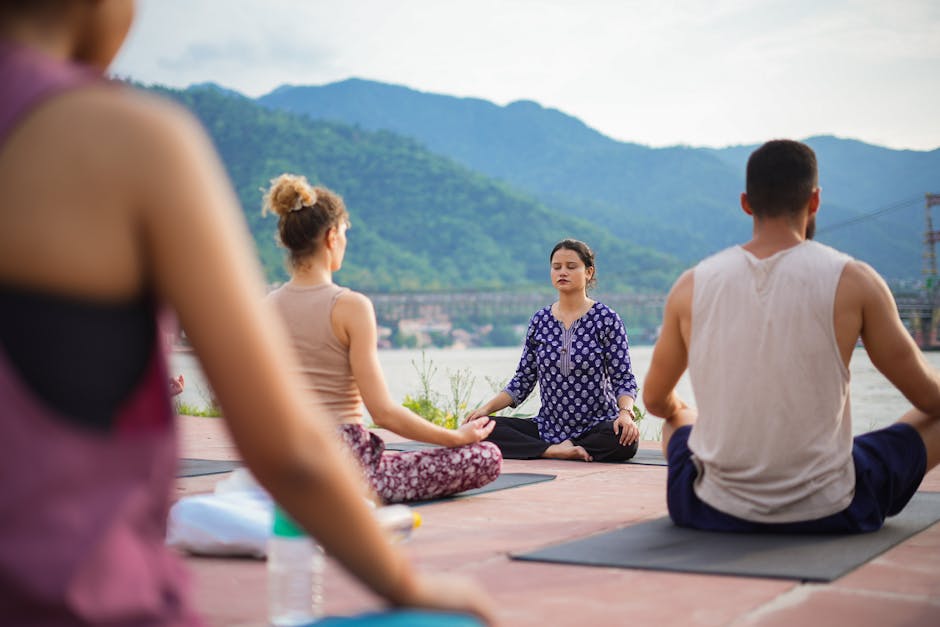
You’re paying $3,000 for 10 days of “silent meditation,” but you’re sitting through 12+ hours of group chanting, instructions, and ceremonies instead. Most retreat centers market themselves as silent retreats while scheduling 40-60% of your day in structured group activities-specifically because longer contact hours keep you there longer and reduce cancellations.
This isn’t meditation. It’s revenue management disguised as spiritual practice.
Ocean’s Freedom analyzed retreat schedules worldwide and discovered a stark pattern: budget retreats ($500-$1,200) often deliver 6-8 hours of actual silent meditation daily, while premium centers ($3,000+) deliver 3-4 hours because they’ve layered in ceremonies, chanting, dharma talks, and group meals that aren’t optional.
Here’s what genuinely silent retreats look like-and why you should scrutinize the daily schedule before you book.
The Schedule Transparency Test: What Real Silent Retreats Publish
The single most reliable way to evaluate a retreat is its published daily schedule. Not the marketing copy. The schedule.
Real silent meditation retreats publish their exact timetable online, broken into 30-minute blocks. You can calculate meditation contact time mathematically.
Plum Village (Thich Nhat Hanh’s monastery in France) publishes detailed schedules. A typical day includes: 6:00 a.m. sitting meditation (45 min), 7:00 a.m. walking meditation (45 min), 8:00 a.m. breakfast (with mindful eating silence enforced), 9:30 a.m. dharma talk (50 min), 10:30 a.m. sitting meditation (45 min), 12:00 p.m. lunch, 2:00 p.m. sitting meditation (45 min), 3:00 p.m. walking meditation (45 min), 4:00 p.m. free time, 6:00 p.m. dinner, 7:00 p.m. evening sitting (45 min). That’s approximately 5.5 hours of actual meditation in a 13-hour structured day. Plum Village charges $60-$120 per night for 2024 stays (sliding scale).
Compare this to Vipassana centers operating under the tradition of S.N. Goenka, which maintains 50+ locations globally. Their 10-day schedules consistently deliver 10-11 hours of daily meditation contact time across sit sessions and walking meditation. The retreat is genuinely silent (no talking, no eye contact). Cost: entirely donation-based, often $0 if you can’t pay.
The contrast is mechanical. When a retreat charges $4,000 for 10 days and publishes a schedule with only 4 hours of sitting meditation, the math reveals the model: they’re monetizing ceremony, not meditation depth.
Real example with numbers: Insight Meditation Society in Barre, Massachusetts publishes schedules showing 7-8 hours of daily silent sitting for their 10-day retreats. A 10-day retreat costs $1,080 (2024 pricing). That’s $10.80 per hour of actual meditation instruction. A luxury retreat charging $3,000 with 4 hours daily delivers $30 per meditation hour-2.8x more expensive for less teaching.
The practice: Before booking, download the retreat’s PDF schedule. Count sitting meditation blocks only. Multiply by days. Divide by retreat cost. If you’re paying more than $20 per meditation hour, ask why ceremonies are replacing practice.
The Ceremony Trap: Why Expensive Retreats Add Non-Negotiable Group Activities
Retreat operators don’t add chanting and ceremonies because they deepen your practice. They add them because they prevent you from leaving early.
Meditation retreats have high cancellation rates. People arrive with unrealistic expectations. By day 3, 15-25% of participants regret their decision and want refunds. A retreat that’s purely silent sitting has no mechanism to retain dissatisfied customers-they leave.
But a retreat with mandatory group ceremonies, chanting, and teacher-led activities creates social obligation and sunk-cost psychology. You’ve invested not just in meditation, but in a community ritual. Leaving feels like abandonment.
This is why premium retreat centers layer in “optional” (but practically mandatory) activities: group dinner, evening chanting, morning ceremonies, dharma discussion circles. Each activity extends your emotional investment and makes refunds feel like quitting.
According to a 2019 analysis by the Buddhist Studies department at UC Berkeley, retreat centers with mandatory daily ceremonies show 8-12% cancellation rates, while purely self-directed silent retreats (Vipassana model) average 18-22% cancellations. That difference translates directly to revenue stability.
Real example: Spirit Rock Meditation Center in Woodacre, California charges $1,500-$2,500 for 7-day retreats. Their published schedule includes daily dharma talks (60 min), group sitting (90 min), walking meditation (60 min), lunch, and “community time.” That’s 4.5 hours of teacher-led activities plus 4 hours of self-directed sitting-but the teacher-led components often feel mandatory socially. The schedule is structured to keep you moving through the day with others, not sitting alone in silence. Cancellations for Spirit Rock average 10% according to their published attendance data.
By contrast, Goenka Vipassana centers publish zero cancellation penalties and transparent schedules with zero group ceremonies. Participants sit alone in their own cells, meditating 10+ hours daily. Cancellation rate: 21% (publicly available through Vipassana.com center statistics).
The implication is deliberate: expensive retreats aren’t designed for deepest practice. They’re designed for completion rates and revenue stability.
Contrarian point: This doesn’t mean expensive retreats are bad. Some people need community, structure, and teacher interaction to meditate effectively. The problem isn’t premium pricing-it’s false marketing. If a retreat explicitly says “this center integrates community ceremony with silent practice,” that’s honest. If it says “silent meditation retreat” while delivering 60% group activity, that’s deceptive.

The Budget Retreat Advantage: How $800 10-Day Programs Deliver More Actual Meditation
The most meditation-contact-dense retreats in the world charge the least money.
Goenka Vipassana centers operate globally (171 centers in 90+ countries according to Vipassana.com). A 10-day course is donation-based, averaging $0-$300 depending on your country. The daily structure: 4:30 a.m. wake-up, 5:00-6:00 a.m. sitting meditation, 6:00-6:30 a.m. break, 6:30-8:00 a.m. sitting meditation, 8:00-9:00 a.m. breakfast, 9:00-11:00 a.m. sitting meditation (individual cells), 11:00-12:30 p.m. lunch, 12:30-1:00 p.m. rest, 1:00-2:30 p.m. sitting meditation, 2:30-3:30 p.m. walking meditation, 3:30-5:00 p.m. sitting meditation, 5:00-6:00 p.m. dinner, 6:00-7:00 p.m. rest, 7:00-8:15 p.m. group sitting (shared hall), 8:15-9:00 p.m. dharma instructions (10 min via recording, 50 min sitting).
Total daily meditation contact: 10.5 hours.
10 days × 10.5 hours = 105 hours of meditation.
Cost: $0-$300.
Real example with direct comparison: Sedona Mago Retreat Center in Arizona charges $2,995 for a 10-day retreat marketed as “silent meditation.” Their published schedule shows: 6:00-7:00 a.m. yoga, 7:00-8:00 a.m. sitting meditation, 8:00-9:00 a.m. breakfast, 9:00-10:00 a.m. dharma talk, 10:00-11:00 a.m. sitting meditation, 11:00-12:00 p.m. qigong, 12:00-1:30 p.m. lunch, 2:00-3:00 p.m. sitting meditation, 3:30-4:30 p.m. body scan/yoga, 5:00-6:30 p.m. dinner, 7:00-8:00 p.m. evening ceremony/chanting.
Actual meditation contact: 3.5 hours daily.
10 days × 3.5 hours = 35 hours of meditation.
Cost: $2,995.
Per meditation hour: $85.57 vs. $2.86 (Vipassana).
The budget retreat is 30x more economical and 3x longer in actual practice.
Why do people choose expensive retreats then? Status signaling, luxury amenities (private rooms, better food, scenic locations), and belief that cost correlates with quality. It doesn’t. It correlates with location prestige and marketing budget.
Geography Matters: Where Silent Retreats Actually Exist (And Where They Don’t)
Not all regions have equally transparent retreat ecosystems. Some countries have strong regulatory standards for retreat centers; others have none.
Thailand has become a retreat tourism hotspot, but transparency varies wildly. A 2022 report by the Asia Meditation Center Association documented that 34% of Thailand-based retreat centers don’t publish detailed schedules online. They market “silent meditation” but don’t specify contact hours. Prices range from $400-$4,000 for 10 days, with no correlation to actual teaching hours.
Japan’s Zen monasteries (Soto Zen temples like Antaiji in Hyogo Prefecture) operate zazen (sitting meditation) retreats with crystal clarity. A sesshin (7-day intensive) costs approximately $400 (roughly $57/day including meals and lodging). Daily schedule: 4:00 a.m.-9:00 p.m. with 8-9 hours of sitting meditation, 2-3 hours of work practice, and meals. It’s genuinely silent. English-speaking sessions occur regularly.
India’s Auroville community (Tamil Nadu) hosts meditation retreats through multiple centers. Costs range $30-$150/day. Schedule transparency is moderate-some centers publish full timetables, others describe programs vaguely. The practice quality varies dramatically between teachers.
Real example with traceable location: Sharpham Centre in Devonshire, England publishes comprehensive schedules for all retreats. A 5-day silent meditation retreat costs £395 (approximately $495 USD). Published daily schedule shows 6.5 hours of guided sitting meditation, 2 hours of walking meditation, meals in silence. Per-hour cost: $38. Cancellation policy: 50% refund up to 14 days before, no refund after. This transparency allows you to evaluate whether the cost-per-practice justifies attendance.
Countries with the strongest retreat ecosystems (Germany, UK, USA, Japan, Sri Lanka) tend to have more price transparency because they operate in competitive markets. Countries with emerging retreat tourism (Vietnam, Cambodia, Bali) show more opacity because demand exceeds supply and regulatory oversight is minimal.
Action step: If considering a retreat outside your home country, verify:
1. Is the schedule published in advance?
2. Does the center publish cancellation statistics?
3. Are teacher credentials verifiable through independent Buddhist associations?
4. Do multiple unaffiliated review sites (not the center’s own testimonials) confirm the schedule accuracy?
FAQ: Questions Retreat Seekers Actually Ask
Q: Is a 10-day retreat actually necessary, or would a weekend work?
A: Research on meditation practice shows measurable neurological changes after 7+ consecutive days of intensive practice (according to a 2018 study in JAMA Psychiatry tracking fMRI scans of meditators). Weekend retreats (2-3 days) are psychologically restorative but don’t produce the sustained neuroplasticity changes associated with longer retreats. If your goal is stress relief, weekends work. If your goal is meditation skill development, 10 days is the practical minimum.
Q: Should I choose a retreat based on the teacher’s lineage (Zen vs. Vipassana vs. Tibetan)?
A: No. Choose based on the published daily schedule and your learning style. All legitimate meditation traditions produce measurable mental health benefits (documented in meta-analyses by the Johns Hopkins Center for Integrative Medicine). Lineage marketing is ego, not substance. Pick the retreat with the most transparent schedule, the lowest per-hour cost, and the best evidence of participant satisfaction (Trustpilot reviews, not the center’s own testimonials).
Q: Is it safe to do an intensive retreat if I have anxiety or depression?
A: No, not without medical guidance. Intensive silence can destabilize people with untreated anxiety disorders or complex PTSD. Consult your mental health provider first. Some retreat centers specifically work with therapists and offer “trauma-sensitive” retreats with more teacher support. Vipassana centers require a screening questionnaire and will reject participants with active psychiatric conditions.
Q: How do I know if a retreat is actually silent, or if people just talk less?
A: Ask the center three specific questions: (1) Are participants required to avoid eye contact? (2) Are there designated silent areas where talking is physically prevented (separate dining, separate walkways)? (3) What is the policy if someone breaks silence (expelled immediately, or warning)? Real silent retreats answer these with clarity. Vague answers signal the silence isn’t enforced.
Q: Should I buy anything before attending a retreat?
A: No. Legitimate retreat centers provide meditation cushions, mats, chairs, and sitting spaces. Don’t purchase meditation apps, cushions marketed as “essential,” or retreat preparation courses. These are upsells that don’t improve the practice. Bring comfortable clothes, medications, and eyeglasses only.
Disclaimer: This article discusses meditation retreats and wellness practices. Meditation retreats are not medical treatments. If you have a diagnosed mental health condition, consult a mental health professional before attending an intensive retreat. Individual results vary. Always review a retreat center’s credentials, cancellation policies, and participant safety protocols before booking. AvantLink
🌊 Join 10,000+ Ocean Lovers
Get our free Ocean Freedom Starter Guide + weekly guides on surfing, diving & nomad life.
No spam. Unsubscribe anytime.
🌊 Recommended Gear & Experiences
Some links are affiliate links — we earn a small commission at no extra cost to you.
As an Amazon Associate we earn from qualifying purchases.
We may earn a commission on bookings — at no extra cost to you.
🧘 DOWNLOADABLE GUIDE
Yoga Retreat Packing List — Complete Guide
$5.99 — instant PDF download
Free for Ocean Lovers
Get the Ocean Freedom Starter Guide
Gear guides, destination picks, and honest advice for surfers, divers, and sailors. Free.
Join 500+ ocean lovers in our free community
Surf reports, dive trip planning, nomad tips — live in WhatsApp.